Turn Stitches into Sales: A Practical Roadmap to a Small Sewing Business
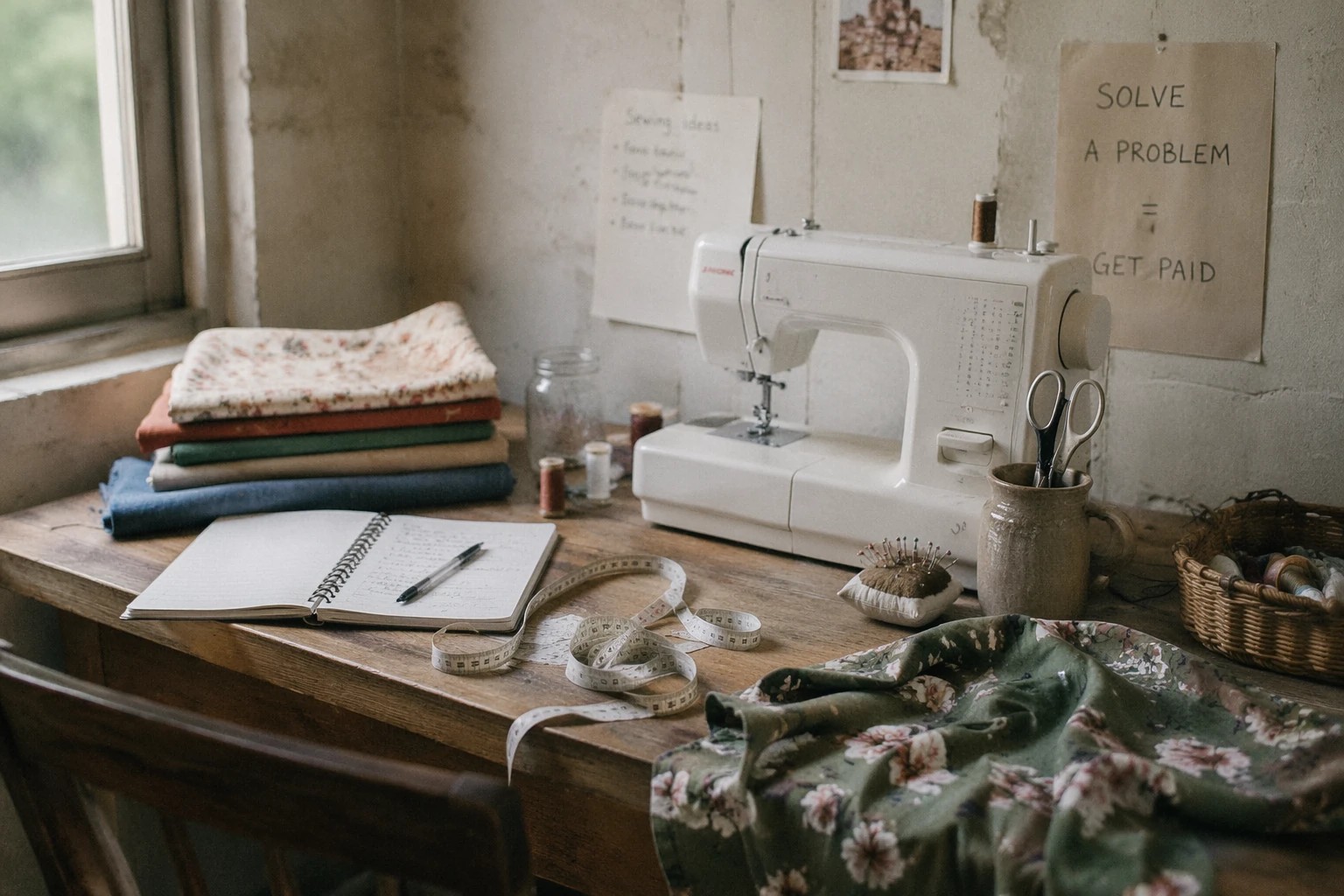
You don’t need a factory to earn from a sewing habit — you need a plan that turns useful, repeat purchases into income. This guide lays out a clear sequence of decisions and actions, from testing a single product to finding steady buyers, so your machine becomes a dependable source of revenue rather than a pile of unused fabric.
1. Start Small, Start Smart: One Machine and One Product
Begin with a minimal setup that lets you finish paid work quickly. Keep a reliable sewing machine, a sharp pair of fabric scissors saved just for cloth, a pressing iron, and basic notions for the single product you plan to offer. Buy only the materials your first item requires so your budget goes to making stock rather than tools you won’t use. Make one polished sample, photograph it in natural light, and fix any flaws before you cut fabric for multiples. This focused approach reduces waste and teaches you real production problems fast, such as how a fabric behaves after washing or how long a single unit actually takes to sew.
2. A Practical First Month Plan That Proves Demand
Use a short trial period to test whether strangers will pay for what you make. Choose one item you can complete consistently and make a small initial batch. Photograph the pieces on real people or in realistic home settings and list them where real buyers shop. Week by week, tweak price, photos, and product notes until a sale happens. If nothing sells, change the price or the presentation rather than redesign your whole line; the goal is to confirm interest quickly. This disciplined sprint sharpens product-market fit and gives you clear next steps: repeat what sold, improve what didn’t, and refine your workflow before adding new items.
3. Choose Products People Buy Again, Not Just Admire
Shift your mindset from making beautiful one-offs to producing items people replace or reorder. Think about everyday textiles that wear out or get lost in rotation — items customers need more than once. Inspect your own home for things that fray or thin out and treat that as market research. The advantage here is rhythm: repeat purchases compound into predictable income. For example, a simple washable kitchen linen or a frequently laundered accessory will earn recurring orders, while ornate occasion-only pieces sell less reliably. Focus on durability, washability, and straightforward finishes so replacements are attractive and painless for buyers.
4. Pick the Sewing Lanes That Reward Detail and Consistency
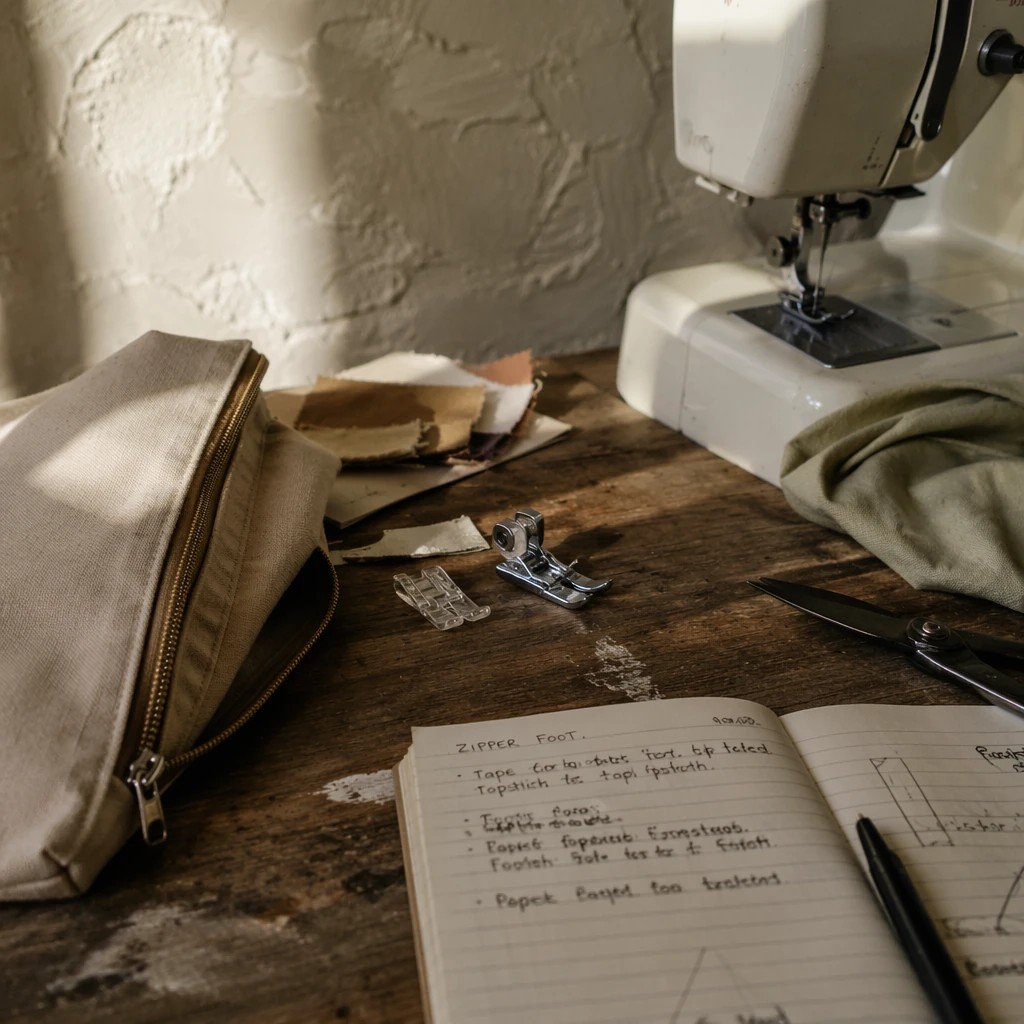
Not every handmade item is an equal business. Products that pay best combine useful features with production-friendly details — a reinforced corner, a secure closure, or a neat internal finish that customers notice. Decide whether you’ll focus on finished goods, local services, or teaching, and invest in the small tools that unlock higher-value work for that lane. For example, mastering a specialty presser foot or a tidy boxed corner can let your pieces stand out competitively. Commit to a few construction details that become your signature; repeatable quality is what turns casual buys into steady customers.
5. Which Handmade Items Tend to Be Most Profitable
Profit often lives in the small and frequent rather than the spectacular. Small sewn goods that get regular use — like table linens, simple pouch sets, and basic sleep accessories — are typically faster to produce, require less shipping fuss, and re-enter a household’s buying cycle. These items also let you buy fabric by the yard and cut multiple pieces at once, dramatically reducing per-piece time. When designing, prioritize simple assembly sequences and finishes that read as high quality on camera. A clean edge, consistent press, and a well-placed closure will make a modest item feel worth more to the buyer.
6. Baby Basics That Bring Repeat Orders
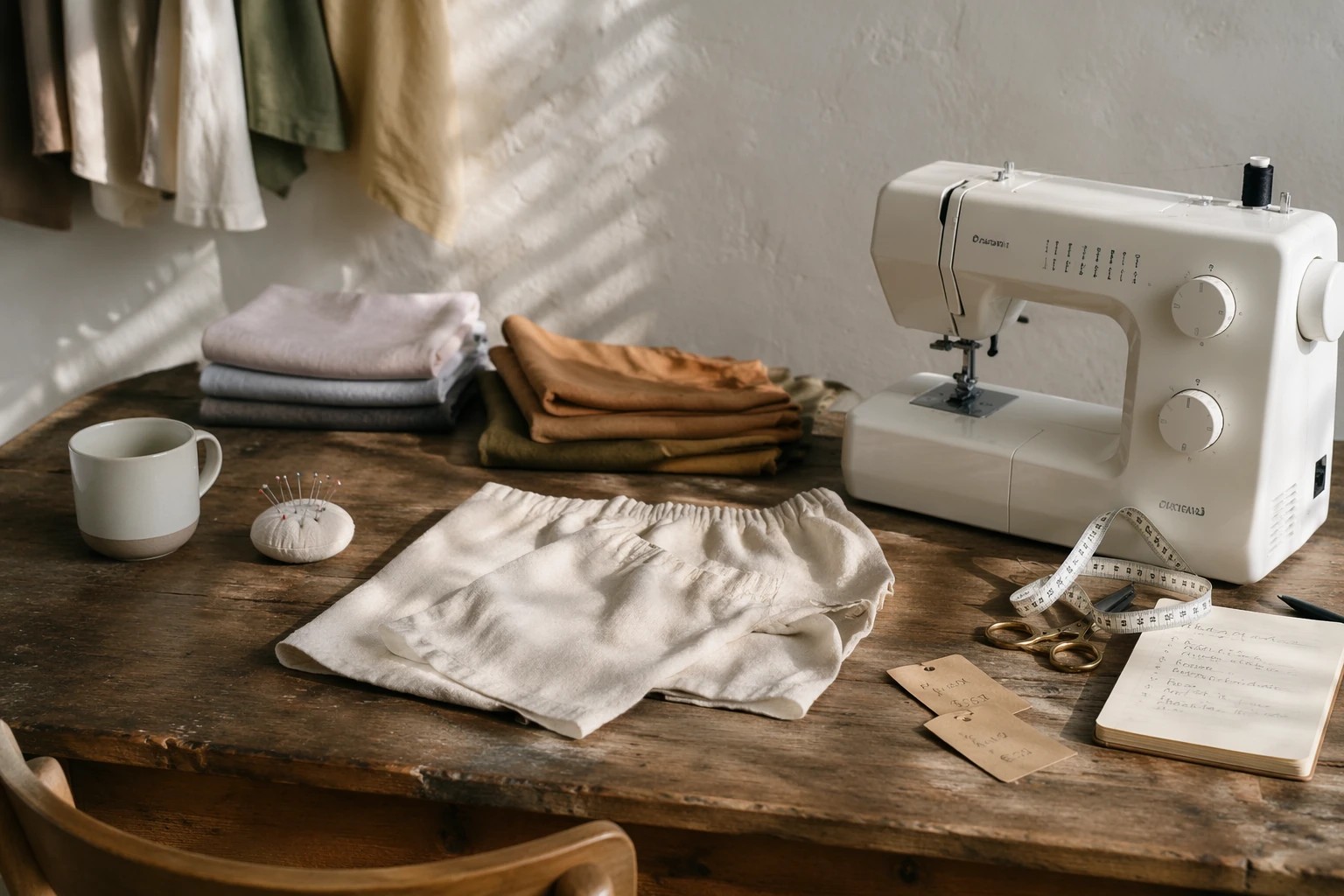
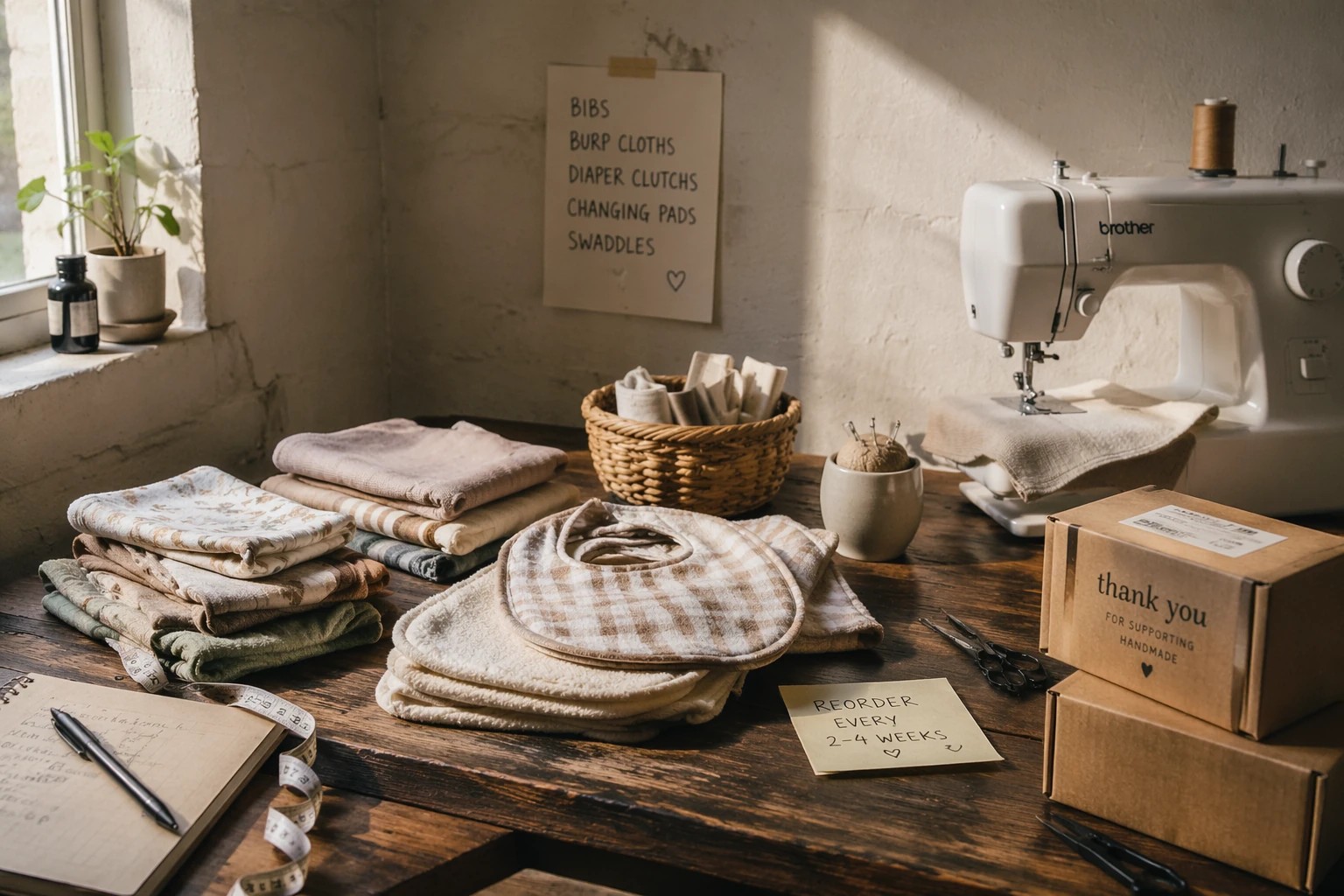
Baby items are inherently repeatable: caregivers go through burp cloths, bibs, and receiving blankets fast. Build a small line of washable, simple pieces made from soft, durable cottons and show how they withstand laundering. Package gift-ready bundles composed of coordinating pieces to appeal to shoppers seeking presents; the curation sells as much as the product. Practical examples: a trio of matching bibs in a neutral color story, a soft square receiving blanket with double-stitched hems, or a contoured burp cloth with an absorbent backing. Communicate care instructions clearly and list fabrics that soften, not pill, when washed.
7. Pet Gear That Gets Replaced and Reordered
Pet owners rotate accessories often, so small, sturdy pet items can generate steady repeat sales. Focus on easily washable fabrics and reinforced stitching for items that endure frequent use. Example offers include a set of patterned bandanas that can be swapped out for photos or outings, machine-washable removable covers for crate beds, and simple webbing leads with comfortable grips. Add personalization options that are quick to execute, like embroidered names in a few standard fonts and thread colors. Pitching wholesale or consignment to groomers and shelters can also turn one-off buyers into regular bulk customers.
8. Home Goods That Sell Better in Sets
Household textiles are easiest to sell when presented as coordinated updates rather than isolated pieces. Design several items that share fabric and finishes — napkins, placemats, and pillow covers — so cutting and sewing them together reduces per-unit time. Offer matching sets photographed to show a cohesive room update, and avoid introducing complicated closures that slow assembly. Practical examples: a pair of envelope-back pillow covers in a neutral linen, four coordinated cloth napkins folded consistently, or a runner paired with matching placemats. Selling multiples increases average order value and makes inventory management simpler.
9. Local Alterations and Repairs: Low Risk, Steady Work
Altering and mending garments is a reliable local service because people often need fast, predictable turnarounds. Start by listing a short menu of common jobs you do well — hems, zipper replacements, and small repairs — and set flat prices so customers know what to expect. Establish a clear turnaround time and stick to it; consistency is a major part of why people return. Practical steps include keeping a ready supply of common zippers and matching threads, creating a simple claim ticket noting pickup date, and tagging finished items with your contact details to generate word-of-mouth referrals from satisfied clients.
10. School and Workwear: Fast Volume, Repeat Clients
Uniforms and work garments produce repeat and bulk opportunities. Parents and small organizations value fast, inexpensive fixes and simple label solutions. Keep supplies on hand for common school or uniform needs — durable iron-on patches, a set of neutral threads, and a quick method for sewing on name tags. Offer a tiered approach: an economy treatment for basic repairs and an upgraded stitched-in label for pieces that need longevity. For local clubs and small businesses, set a minimum order and quote per-piece pricing that becomes more attractive as quantities rise; batch work is where you can protect your time while serving repeat customers.
11. Event Sewing Without Burning Out: Clear Boundaries
Event work can pay well but comes with thin margins for error. Treat weddings and large events like short production runs: define the scope, require a deposit, and limit fittings. For straightforward event pieces — table runners, chair sashes, simple linens — offer per-piece pricing with a small discount for bulk quantities to avoid negotiating every item. For bridal alterations, classify jobs by complexity and price accordingly so that heavily beaded or layered garments carry a different fee than simpler hems. Put limits in writing: include a set number of fittings and an hourly rate for extras to keep expectations aligned.
12. Price Work with Real Costing, Not Guesswork
Make pricing an intentional exercise: list the true replacement cost of every material, then account for your labor using a set hourly target. When you time a full run — from layout to final press — you capture the real time investment, including mistakes and set-up. Add platform or processing fees and packaging as line items, and include a small allowance for waste or miscuts. For personalized pieces or unusual fabrics, build a separate charge so the base offering stays simple. This transparent, consistent method prevents underpricing and allows you to evaluate whether increasing volume or raising prices is the better route to sustainable income.
13. Where to Find Buyers: Match Channel to Product
Different items sell better in different places. Use online marketplaces for search-driven shoppers who type product terms and compare listings; present finished, well-photographed items with clear variations. For bulky or fit-dependent work, local listings and pickup options remove shipping friction and attract immediate buyers. For wholesale or contract work, approach boutiques and organizations with a tidy sample, clear unit pricing at multiple quantity breaks, and a reliable lead time. Also consider local partners — dry cleaners, dance studios, or groomers — who can send repeat business. Choose the channel that suits how customers think about the product: impulse, need, or ongoing replacement.
14. Offer Personalization That’s Repeatable, Not Exhausting
Personalization boosts perceived value when the options are controlled. Limit choices to a small menu of fonts and thread colors and restrict embroidery to flat, stable areas that stitch cleanly. Charge a simple per-character or per-piece fee so the math is predictable for you and the buyer. Avoid taking on one-off custom sketches unless you have a clear extra fee and production timeline. Instead, design curated personalized product sets — like a series of towels with the same motif — so you keep batch efficiencies while offering that bespoke touch. This approach keeps margins intact and prevents custom requests from derailing your schedule.
15. Teach What You Do Best: Patterns and Short Workshops
Monetize knowledge by teaching narrow wins that help beginners finish a specific, satisfying project. Pair a simple PDF pattern with a short demonstration video that shows the key steps people trip over, and offer both as a bundle. Example offerings include a structured pouch that stands up on its own, a basic top that requires no zipper, or a dog accessory that lies flat when worn. Keep instructions clear and include troubleshooting tips. Selling the learning alongside the pattern increases perceived value and builds an audience that trusts you before they purchase higher-priced kits or repeat items.
16. Add Value with Content, Kits, and Subscriptions
Once you have a reliable product and audience, add secondary revenue streams that leverage existing work. Offer pre-cut kits for popular items so customers can skip sourcing, or launch a simple subscription that delivers a small project monthly. Use content to document process and problem-solving — quick tips, fixes, and short how-tos — to build trust and make affiliate recommendations natural. For example, a kit could include pre-cut fabric, interfacing, and a printed mini-pattern for a pouch you sell finished. These add-ons increase per-customer value and deepen relationships without demanding full-time teaching or complex new systems.
17. Scale Smart: Batch Work, Outsource Cutting, Simplify Packaging
When orders rise, protect your time by batching and delegating non-specialized tasks. Cut multiple units at once, set up assembly-line steps for pressing, sewing, and trimming, and consider paying a local cutter or an hourly helper to prepare pieces. Simplify packaging to reduce minutes per order — a sturdy mailer and a small thank-you card often suffice — and increase minimum order quantities to make small orders profitable. Train any assistant on one pattern and one finish so quality stays consistent. These small operational shifts buy you hours for higher-value work and keep growth manageable.
Treat sewing as a service and a solution, not only as craft. Start with one reproducible item, price it deliberately, find the channel where buyers already shop, and refine your workflow. Small, repeat purchases and dependable local services create steady income; teaching and kits add layers once your core work is consistent. With a short, disciplined test and steady production habits, the machine in your corner can move from hobby to a reliable source of money.