27 Funny Elf on the Shelf Setups That Turn Ordinary Mornings Into Holiday Stories
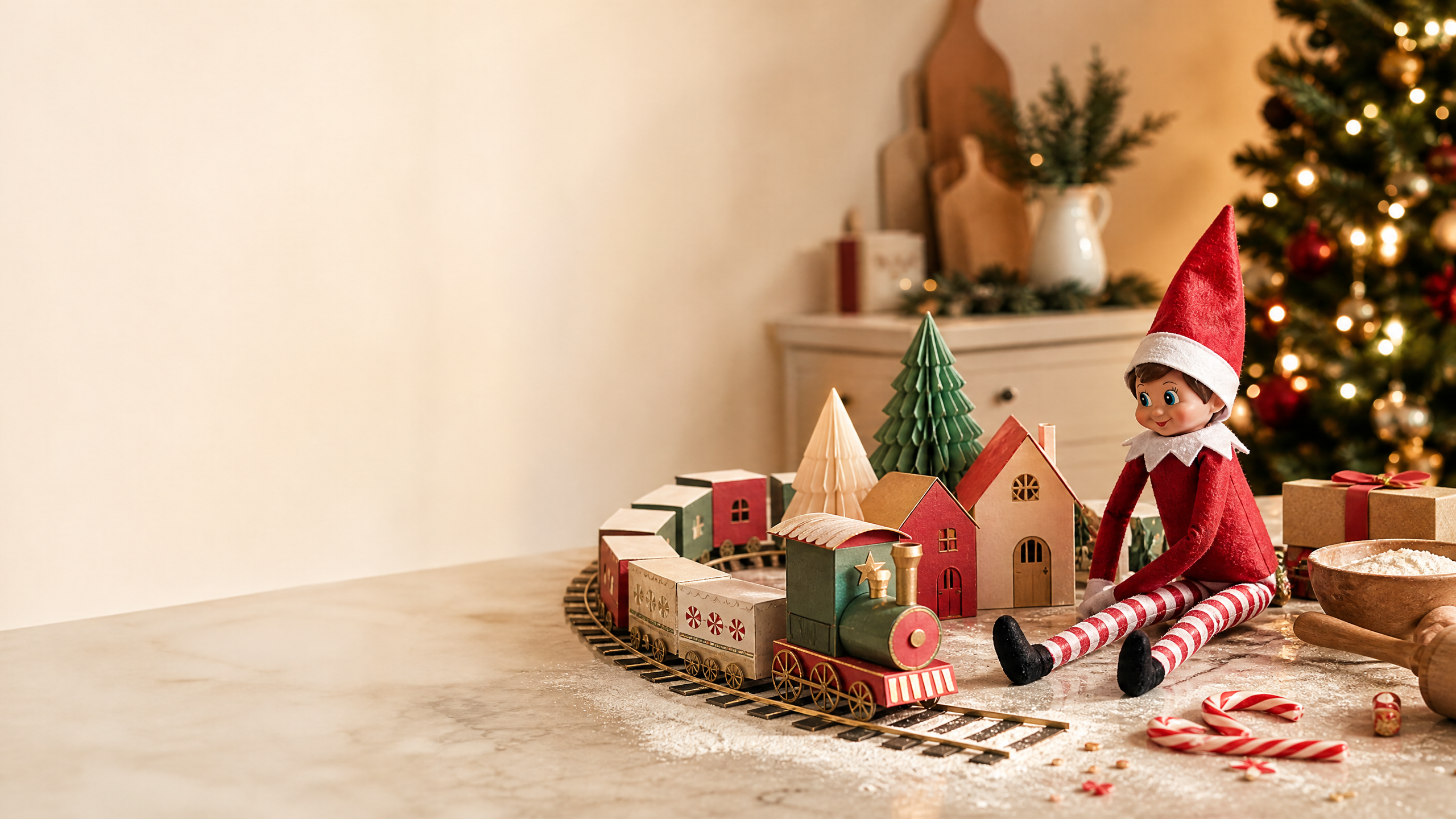
December mornings do not need elaborate props or a house full of decorations to feel special. Sometimes all it takes is a small elf, a few household supplies, and a willingness to let the scene be a little silly. When children discover a new setup before breakfast, the search itself becomes part of the family ritual—and the funniest scenes are often the ones that look as though the elf made a questionable decision overnight.
The best setups are not competitions for the most elaborate display. They are quick, safe, and easy to reset. A paper towel can become a tightrope, a mixing bowl can turn into a sled, and a stack of books can serve as a stage. The ideas below are organized by the kind of morning you want to create, so you can choose a scene that fits your energy level, your children’s ages, and whatever is already in the house.
Before You Begin: Make the Tradition Work for Your Family
Choose a consistent place to store the elf’s small props, such as a basket with ribbon, scrap paper, washable markers, clothespins, and painter’s tape. Keep food scenes limited to clean, easily contained ingredients, and skip anything that could create a choking risk or leave a difficult mess. It is also helpful to decide on a simple rule for moving the elf. Some families prefer that children only look, while others make the morning a cooperative hunt.
A good overnight setup should take only a few minutes to assemble. If an idea requires furniture to be climbed, electrical cords to be moved, or delicate items to be handled, simplify it. The joke should be the elf’s predicament—not a stressful cleanup for the adults.
| If you have… | Try a scene built around… |
|---|---|
| Five quiet minutes | A note, a paper prop, or a silly “official” sign |
| A curious preschooler | Color, texture, and a gentle search |
| Older children | A puzzle, mystery, or miniature challenge |
| A busy morning | A seated display that needs no cleanup |
| A weekend | A larger story with several clues |
Tiny Troubles and Household Mischief
1. The Elf’s Very Unofficial Office
Set the elf at a small desk made from a shoebox lid. Add a pencil, a few sticky notes, and a sign that reads “Department of Snack Quality Control.” Scatter three harmless “reports,” such as “Cereal: excellent crunch,” “Banana: suspiciously healthy,” and “Toast: needs more butter.” The humor comes from treating breakfast like a serious workplace assignment.
2. A Tissue-Box Elevator
Place the elf beside a tissue box with a paper sign labeling it “Floor 1,” “Floor 2,” or “Penthouse.” A strip of ribbon can serve as the elevator cable. Add a note explaining that the elf pressed the button for the kitchen but arrived in the living room instead. This setup works well when you want a visual joke without touching anyone’s belongings.
3. The Great Sock Mix-Up
Arrange a few clean socks in a line leading to the elf. Give the elf one sock as a hat and another as a scarf, then place a note nearby: “I was trying to sort laundry. I may have made it worse.” Keep the laundry clean and use only a few pieces so the joke feels intentional rather than messy.
4. A Tape Measure Adventure
Lay a soft measuring tape or ribbon across the floor and position the elf at the end with a homemade explorer badge. The elf can claim to have measured the distance from the couch to the cookie jar. Add tiny paper footprints along the route. Children can follow the trail and discover that the “expedition” ended at an entirely ordinary household spot.
5. The Missing Remote Mystery
Place the elf near the television remote with a hand-drawn detective badge and three paper clues. The clues can point to obvious locations such as “near something soft” or “where shoes wait.” Hide the remote somewhere sensible, never where it could be stepped on, and let the children solve the case before screen time.
Snack-Time Scenes With Minimal Cleanup
6. The Cracker Architect
Give the elf a few crackers and arrange them as a tiny wall, bridge, or throne. A note can announce, “Construction paused because the building materials were delicious.” Use only a small amount of food and return the crackers to the pantry or serve them with a meal instead of leaving a trail of crumbs.
7. The Fruit Sticker Gallery
Use removable produce stickers or small paper circles to create a pretend art exhibition on a refrigerator-safe surface. The elf can stand beside a sign titled “Modern Art, Mostly Round.” Let the children add their own label to one piece of the gallery. This idea brings color into the scene without turning breakfast into a sugary spectacle.
8. Cereal Box Broadcast
Position the elf behind an empty or nearly empty cereal box as though hosting a morning news program. Make a paper microphone and write a headline such as “Breaking News: Someone Finished the Milk.” Invite children to supply one cheerful headline of their own, perhaps about a pet, a snow day, or a missing mitten.
9. The Mug Hot Tub
Place the elf beside an empty mug or small bowl filled with cotton balls. A folded washcloth becomes a towel, and a paper sign says “Quiet Zone: Elf Recharging.” Keep the mug on a stable surface and avoid hot liquids. The scene feels cozy while remaining entirely pretend.
10. The Lunchbox Taste Test
Set the elf beside two empty lunch containers and a scorecard with categories such as “crunch,” “color,” and “napkin style.” The elf can award absurdly specific points to ordinary items. This is a playful way to involve children in packing without presenting the elf as a reason to pressure them to eat anything.
Games, Challenges, and Miniature Competitions
11. Paper-Cup Bowling
Line up a few lightweight paper cups and place a soft pom-pom or rolled-up sock nearby as the bowling ball. The elf can hold a scorecard showing a dramatic but impossible score. In the morning, children can take one turn knocking down the pins and then rebuild the lane.
12. A Puzzle Piece Protest
Give the elf a small puzzle and place one piece under its hand. A sign might read, “I refuse to continue until someone finds the corner.” Choose a puzzle that can be completed quickly, or use a few large pieces on a tray. The setup creates a low-pressure activity rather than another task to finish.
13. The Indoor Mini-Golf Hole
Make a tiny golf course with a cardboard cup, a paper flag, and a soft ball. Use books or blocks as gentle boundaries. The elf can be sprawled beside the hole with a note admitting, “I overestimated my short game.” Put the course away after a round so the floor stays clear.
14. A Board-Game Rematch
Seat the elf beside a simple board game with one playing piece moved dramatically forward. Add a note that says, “Requesting a rematch after a highly controversial roll.” If the game includes small pieces, keep the scene on a table and supervise younger children.
15. The Paper-Airplane League
Fold three or four paper airplanes and line them up behind the elf. Give each plane a playful name, such as “The Breakfast Flyer” or “The Wobbly Comet.” Children can test the planes in an open area, then collect them before anyone heads out the door.
16. The Marshmallow-Free Snowball Fight
Use white cotton balls or crumpled paper rather than food to create a miniature snowball scene. Place the elf behind a tissue-box “fort” with a few paper snowballs nearby. Add another toy or stuffed animal as the opposing team. The scene is funny at a glance and does not invite a sticky cleanup.
Storybook and Imagination Setups
17. The Stuffed-Animal Classroom
Arrange a few stuffed animals in rows with the elf standing beside a paperboard. The lesson can be “How to Hide in Plain Sight,” “Advanced Pillow Forts,” or “Counting Down to Cocoa.” Give one animal a raised paper hand. Children may enjoy inventing what each student answered.
18. A Library After Closing
Stack a few books around the elf and place a bookmark in its hands. A note can say, “I stayed up for one more chapter.” Choose a family favorite, but do not bend the book or leave it in a place where it might be damaged. This scene naturally encourages a few quiet minutes of reading.
19. The Movie Poster Premiere
Create a miniature poster on paper for a fictional film such as The Case of the Vanishing Mitten or Return of the Lost Ornament. Position the elf in front of a row of cushions as if preparing for a premiere. The children can invent the movie’s plot and design a sequel later.
20. A Museum of Ordinary Things
Place household objects—an old key, a pinecone, a ribbon, and a wooden spoon—on a tray with tiny labels. The elf serves as the curator of “Important Objects Nobody Notices.” Make the descriptions wonderfully overdramatic: “Spoon, believed to have stirred at least four sauces.” Avoid using anything sharp, fragile, or valuable.
21. The Weather Desk
Set the elf beside a paper weather map showing “100% chance of giggles” or “light mitten activity.” Add cotton-ball clouds and a drawn sun. The children can update the forecast with their own prediction for the day. This is especially easy to adapt for a school morning, a weekend, or a rainy afternoon.
Scenes That Invite a Little Help
22. A Kindness Mission
Place the elf beside three paper cards, each naming a small act of kindness: thank someone, tidy one shared space, or leave an encouraging note. Keep the requests optional and realistic. The point is to give the family a warm prompt, not to turn good behavior into a test administered by a doll.
23. The Lost-and-Found Counter
Create a small counter with paper labels for “one mitten,” “two hair ties,” or “a mysterious building block.” The elf can be the overly serious clerk. Children can contribute a safe, genuinely misplaced item and return it to its owner after the joke has run its course.
24. The Ornament Engineer
Give the elf paper, crayons, and a few ribbons, then display a drawing of an imaginary ornament design. The elf’s note can ask the children to sketch a decoration that represents something they enjoyed this year. No glitter is necessary; colored pencils or washable markers keep the activity manageable.
25. A Breakfast Thank-You Station
Place small slips of paper near the elf and invite everyone to write one sentence of appreciation for another person in the household. The elf can hold a sign reading “Mail for the Nice List,” but the activity should stay focused on noticing one another rather than earning a reward.
26. The Overnight Packing Error
Put the elf beside a small tote with a scarf, a book, and one mitten—clearly not a complete travel kit. The note can say, “Packed for an Arctic adventure. Forgot the other half of my gloves.” Children can help identify what is missing, then repack the tote for an imaginary trip.
27. The Grand Finale: A Tiny Award Ceremony
For the last setup, make paper certificates for everyone in the family. Awards might include “Best Listener of Funny Stories,” “Most Determined Sock Finder,” or “Excellent Cocoa Stirrer.” Position the elf at a podium made from a small box and let each person receive an award. The ceremony ends the tradition by celebrating shared moments instead of focusing on the elf’s departure.
How to Keep the Ideas Fresh Without Staying Up Late
Rotate the type of scene rather than trying to invent a completely new world every night. A simple rhythm might move from a visual joke to a tiny game, then to a reading prompt, a food-free challenge, and a kindness note. Reusing the same ribbon, paper, cups, and cotton balls in a new context saves time and often makes the scenes feel more coherent.
It also helps to prepare several notes in advance. Write short messages on index cards and keep them with the elf’s supplies. When an evening runs late, place the elf beside a card and one prop. A funny sentence can carry the whole setup: “I tried to make a sandwich. The bread was taller than I am.” The goal is a morning smile, not a miniature production.
A Final Thought for Grown-Ups
The most memorable elf scenes are rarely the most expensive or complicated. They are the ones that give children a reason to laugh, search, imagine, read, or do something kind together. If a setup takes longer to clean than it took to create, it is perfectly fine to choose a simpler idea the next night. Holiday traditions should add warmth to the season, not another source of pressure.
Choose one small scene, let the children add their own details, and allow the story to change from year to year. A paper airplane that crashes, a detective who loses the remote, or a curator who takes a wooden spoon far too seriously may become the family memory everyone retells long after the decorations are packed away.