How to Stop the Cycle of Empty Balances: A Practical Plan to Build and Protect a Cash Cushion

Living with a thin balance is less about willpower and more about structure. Small timing glitches, forgotten subscriptions and a lack of separation between spending and saving let money flow out before it can become a cushion. This article lays out clear, practical steps you can start this week to create a visible buffer, close the common leaks, and get your money working predictably for you.
1. Spot the timing traps and invisible drains

Begin by mapping when money arrives and when it leaves. Put every upcoming pay date and recurring debit on a calendar for a few months so you can see clusters where bills land before income. That makes timing problems fixable: many lenders and service providers allow due-date changes online. Look back over the last month of transactions and flag small charges you don’t recognize; forgotten subscriptions and automatic tips add up. Finally, set aside a steady monthly amount for predictable annual costs in a separate account so those bills arrive paid, not as painful surprises. A few visible changes erase most ‘mystery’ shortfalls.
2. Build a budget that runs on the floor, not the fantasy
Design a budget that survives the leanest reliable month rather than one that depends on your best weeks. Identify the lowest steady income month from the past year and treat that as the baseline for necessities. Allocate each incoming paycheck to priorities before you spend: housing and fixed bills, then saving for irregular expenses, then flexible spending. If you share household costs, assign clear payment roles and a short routine—one person pays a bill, the other transfers their share in advance—so due dates never slip. For irregular earnings, allow a modest buffer you can count on and route the rest straight into savings to avoid inflating everyday spending.
3. Build a visible starter cushion quickly
The first usable cushion won’t appear if your checking account treats every dollar as available. Arrange for a portion of each deposit to move automatically to a separate savings account the day after payday; the timing matters more than the exact amount. Use a different bank or an account with a one-day transfer delay to reduce impulse withdrawals. Funnel small wins—cash-back refunds, odd reimbursements, gift money—into this account so loose change becomes a real balance. For one short month, run a focused sinking-fund sprint: pick a predictable annual cost, divide it into monthly deposits, and watch habit and balance grow. That visible cushion prevents small setbacks from becoming new debt.
4. Cut recurring waste without feeling deprived
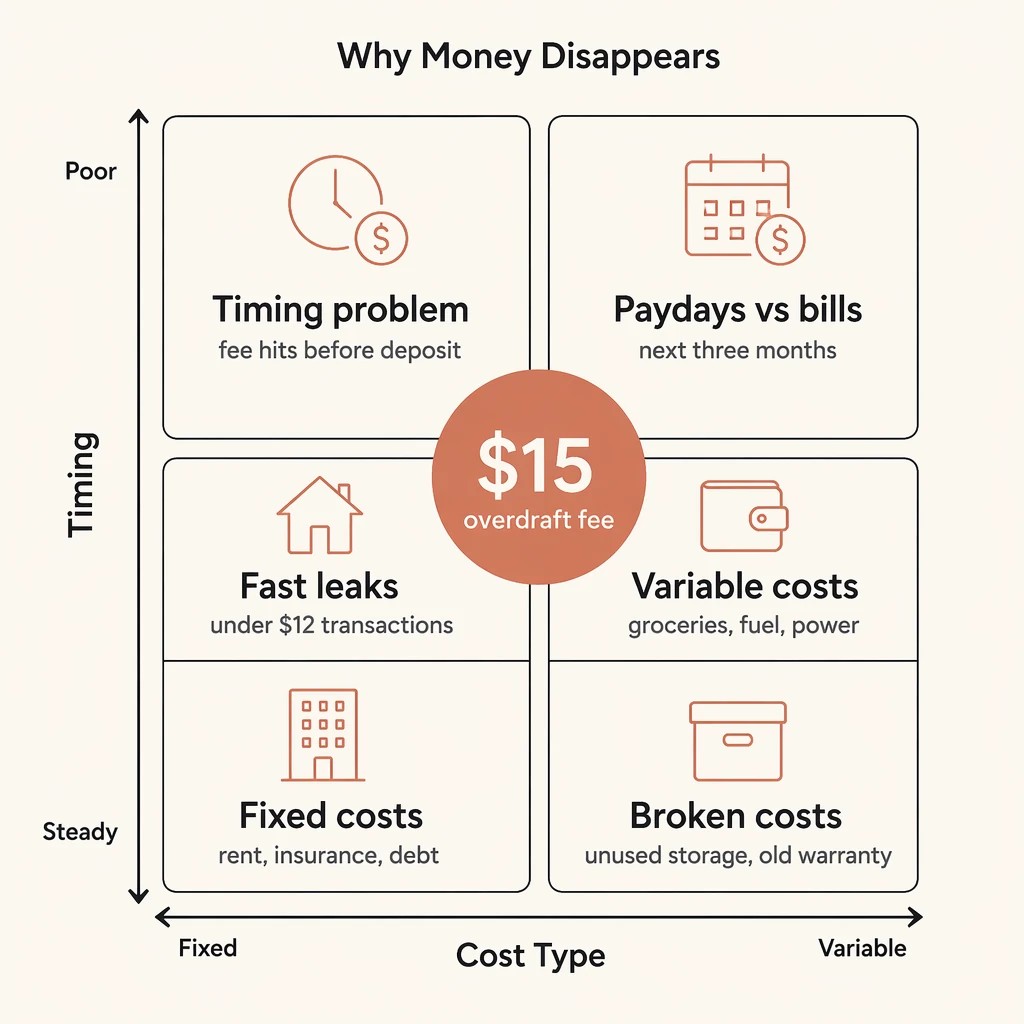
Attack repeat expenses that survive by inertia. Scan recent statements and cancel any subscriptions you can’t recall using; those small monthly charges add up quickly. Call major vendors—insurance, phone, internet—and ask what the current base offer is or whether there are adjustments that lower your bill while keeping essential coverage. Shop at the store with a written grocery list and resist unplanned items; you’ll save more than chasing occasional coupons. Review transport habits: confirm your car’s fuel requirements, compare ride services for loyalty perks, and check parking or toll alternatives. Simple renegotiations and habit changes can free up noticeable monthly cash without sacrifice.
5. Triage debt while protecting your safety net
Debt should be paid down logically without erasing your short-term safety. Keep a separate account that covers a month of essential living costs so a missed shift or a flat tire doesn’t force new borrowing. Once that buffer exists, prioritize extra payments toward the debt carrying the highest finance cost rather than the smallest balance. Continue minimum payments on other accounts to avoid penalties while directing surplus where it reduces long-term cost most. Consider consolidation only when the transfer fees and new terms actually lower your total cost in a realistic payoff timeline. Run conservative numbers before moving balances so you don’t refinance more risk.
6. Add income in fast, low-risk ways

When the gap is urgent, pick work that pays for finished tasks rather than long projects. Local errands, data-entry gigs, and one-off tasks often pay within days and require no portfolio. Monetize skills you already use at work—bookkeeping fixes, simple design tweaks, proofing—or sell unused household items before buying tools or training. Always calculate the real time cost: include travel, prep, and follow-up hours so you know whether a gig’s pay is worth it. Avoid opportunities that ask you to pay to start; legitimate work pays you first. Start small, earn quickly, and let that breathing room make more selective, higher-value choices possible later.
7. Make gains stick as your income grows
Without guardrails, every pay increase can silently vanish into upgraded subscriptions and lifestyle creep. Put a short holding rule on new recurring expenses: wait a full billing cycle before adding any ongoing service above a modest threshold. That pause often removes impulse upgrades while preserving the options you truly value. Proactively ask for raises when you have recent, measurable wins and request a clear timeline if the employer needs more time. After each payday, spend fifteen minutes checking automatic transfers and bill changes so small drift never becomes a hole. When major life changes occur, rebuild the budget to fit the new reality rather than stretching old numbers.
8. A few actions that reshape the next month
Implementing a handful of focused moves produces outsized results. Identify the top non-bill categories that consumed your money last month and pick the largest to cap immediately. Set one small recurring transfer from each paycheck to a separate savings account so the habit runs without daily decisions. Run a simple cash-flow calendar: every payday on one side, every fixed bill on the other, dated exactly. That single page will reveal which week is tight and whether moving a due date or adjusting one transfer will break the squeeze. Small, repeatable habits replace constant crises with a predictable rhythm.
9. Quick answers to common practical questions
If income varies, budget using your lowest reliable month and treat excess as potential savings so good weeks don’t become spendable illusions. Save a modest starter cushion first so surprises don’t create new debt; afterward, prioritize paying high-cost interest while maintaining the buffer. Fast side income comes from work that pays per completed task—local errands and short-turn digital gigs—rather than projects that take weeks to monetize. Moving a bill due date can be more effective than trimming small comforts when timing causes shortfalls. Finally, when a fixed cost changes significantly, rebuild the plan to reflect the new baseline rather than forcing old numbers to fit.
Start with one visible change this week—map your next few paydays or set one automatic transfer—and let that small, deliberate move break the cycle. Repeat the quick checks after each deposit and your balance will begin to behave differently, giving you the breathing room to make better choices without relying on willpower alone.