Smart Scheduling for Instacart Shoppers: When to Log On, What to Expect, and How to Earn More
Working for Instacart can flex around your life, but timing makes a big difference in what’s available and how profitable your shifts are. This guide walks through what controls batch timing, when demand typically rises and falls, and practical tactics to make the most of each window—without promising fixed earnings or exact start times.
1. Why store hours are the real governor of batches
The platform itself is always active, but the flow of shopping work closely follows the hours individual retailers operate. If a grocery or drugstore opens later in the morning, the orders that require in-store shopping won’t appear until those doors are unlocked. Conversely, partners that keep locations open around the clock create opportunities at unusual hours. Practical example: if you live near a late-night convenience store, you might see orders during off hours that aren’t available to shoppers only around standard supermarket opening times. Track local store schedules for a week to learn which retailers release new batches when you’re planning to work.
2. Recognizing peak windows and quieter pockets
Demand tends to cluster around predictable daily and weekly rhythms: times when people are wrapping up work, planning meals, or stocking up for the weekend. These windows usually produce more orders and often higher tips, but they also come with more competition from other shoppers and busier stores. For instance, evenings can flood with short, last-minute grocery runs, while weekend mornings often yield larger restocking orders. To experiment, pick two different days and work a couple of shifts at different times; compare how many batches you’re offered and how long each takes to complete so you can prioritize the most profitable windows for your schedule.
3. Weighing the trade-offs: which shift fits your life?
Every shift has pros and cons. Busier blocks mean more orders but more traffic and crowded aisles; quieter stretches offer calmer runs and fewer pickups but fewer opportunities. Think about what you value—steady volume, quick runs, or predictability—and choose slots that match. Example: a parent juggling school runs might favor mid-morning windows to avoid evening congestion, while someone who dislikes crowds might prefer late-night orders from 24-hour partners. Try rotating through different shifts over a month, then pick the ones that balance earnings, time spent, and personal convenience.
4. The morning tradeoff: advantages and common pitfalls
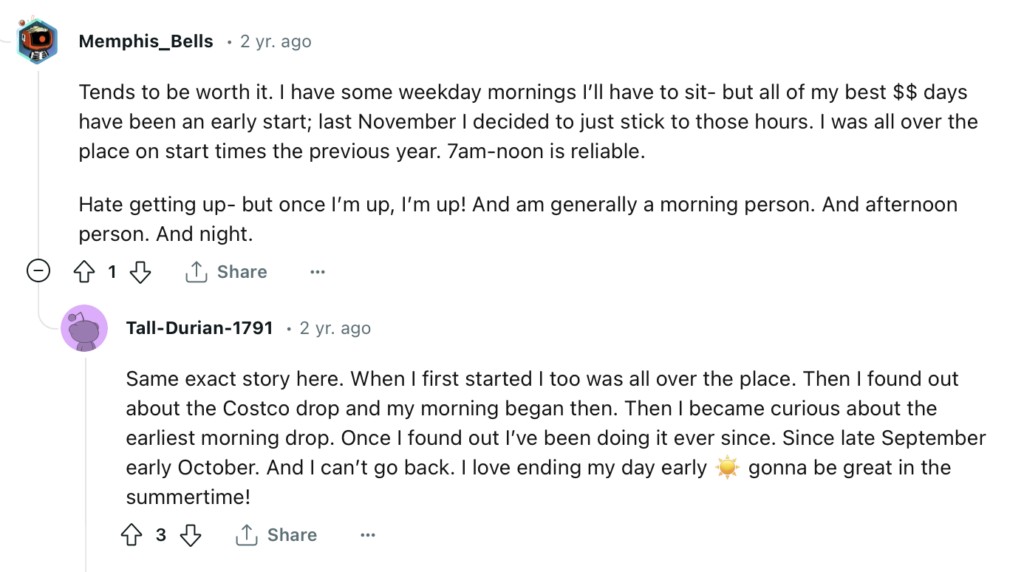
Early shifts can offer lighter traffic and fewer fellow shoppers vying for batches, but they also carry unique challenges. Many orders available early were scheduled previously and might include picky requests, low tips, or items that haven’t been restocked yet. That increases time spent handling replacements and customer interactions. Practical tip: if you take early slots, position yourself near your preferred store just before it opens and scan available batches quickly so you can grab the best ones. Carry a small kit—extra masks, hand sanitizer, and replacement suggestions—to speed up customer conversations about out-of-stock items.
5. How orders begin to appear in your app
Batches show up on the shopper screen as customers place or schedule orders, and the system distributes them according to proximity, availability, and shopper performance. That means you won’t see a neat start-of-day time that applies everywhere; instead, orders roll in based on local demand and which stores are active. Example: if a neighborhood has many people placing recurring weekly lists in the same morning window, your app will fill with similar batches when those customers schedule their deliveries. To catch more of these, stay logged in and refresh your available batches view during the windows when regular ordering patterns are common.
6. Finding your local sweet spot: no one-size-fits-all schedule
Because markets differ, the best time to work varies from place to place. Weather, local habits, and special events all shift demand, so the clearest way to learn your market is to test and track. Try working short blocks at different times over a two-week period, logging when you saw the most suitable batches and how long each took. Example: if a town holds a weekend farmers’ market, nearby stores may be quieter then but busier earlier or later; adjust your availability accordingly. Use those notes to create a personalized weekly plan that targets the slots that consistently produce the orders you prefer.
7. Getting started: the essentials to begin shopping
Before you pick up your first batch, make sure you meet basic requirements and understand the app. You’ll need eligibility to work, a smartphone that runs the shopper app, and, depending on the role, reliable transportation and the ability to lift grocery bags. Complete the onboarding steps, pass any required background checks, and learn the app features like available batches, customer notes, and earnings screens. Practical example: if you choose an in-store role, practice navigating aisles quickly and keeping items organized in your cart; if you do deliveries, rehearse efficient trunk loading and contactless handoffs to save time and improve customer satisfaction.
8. Simple, actionable ways to improve earnings and efficiency
Timing matters, but tactics matter just as much. Be selective about batches—prioritize orders with good pay-to-distance balance, and keep a close eye on the app so you can accept worthwhile opportunities quickly. Position yourself near favored stores to increase the chance of receiving nearby batches, and focus on speed and clear customer communication to boost ratings and tips. Practical moves include tracking mileage for tax deductions, carrying insulated bags and a handheld scanner or list organizer to speed shopping, and cross-apping with other delivery platforms when your market is slow to diversify income.
Timing is important, but the best schedule is the one you build from local habits, personal priorities, and a few smart habits. Test different windows, track what works, and combine timing with efficiency techniques to shape a part-time or full-time rhythm that fits your life.