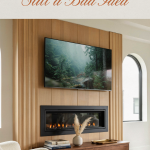
TV Over The Fireplace? Why It’s Still A Bad Idea In 2026 (And What To Do Instead)
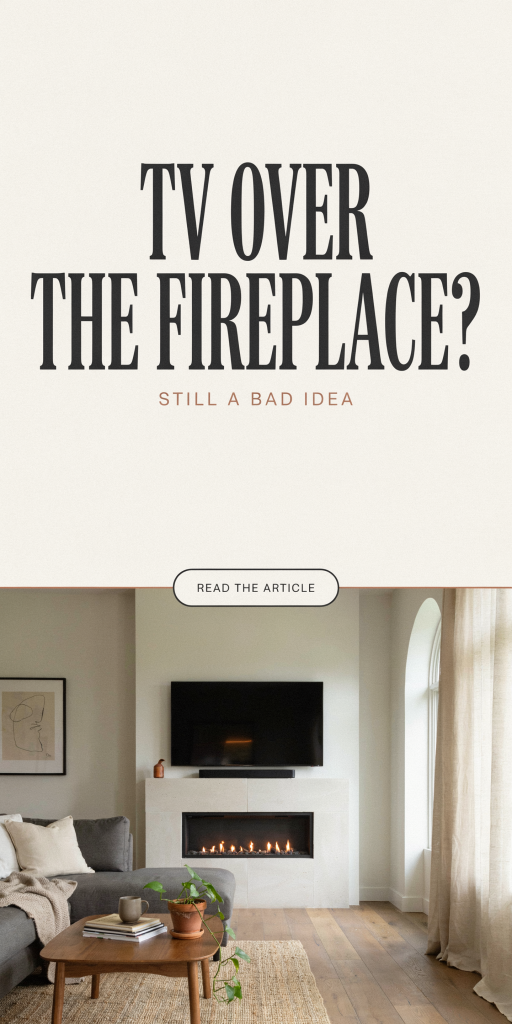
We’ve all seen the picture-perfect living room: a roaring fireplace, a sleek flat-screen mounted above it, and a designer-approved aesthetic that screams minimal clutter. It’s an appealing look, but behind the Instagram polish there are technical, ergonomic, and safety compromises that haven’t gone away, even though newer TV technology and slimmer profiles. In this text we’ll cut through the hype and explain, in practical terms, why “TV over the fireplace” remains a problematic choice in 2026. We’ll also show better options and, for those who can’t resist the look, how to make an over-fireplace setup as safe and comfortable as possible. Our goal is to give homeowners, renters, and DIYers evidence-based guidance so you can weigh style against performance and safety before you drill holes in that mantel.
Why Mounting A TV Over The Fireplace Continues To Be Controversial
The idea of mounting a TV over the fireplace is controversial because it forces homeowners to choose between aesthetics and function. We’ve watched this debate evolve for more than a decade, and while TV panels are thinner and smarter, the fundamental issues remain: heat exposure, viewing ergonomics, and difficult wiring or service access. Designers and homeowners often prioritize a tidy focal point, fireplace plus TV, because it creates symmetry and saves wall space. But trade-offs matter. Mounting above the fireplace places the screen higher than recommended viewing angles, complicates cable runs, and can shorten a TV’s lifespan if heat or soot reaches the electronics.
Manufacturers publish operating temperature ranges for a reason, and HVAC dynamics around a hearth contradict ideal conditions. Also, even when modern fireplaces are “cool-to-the-touch,” chimney drafts, steam from humidifiers or kettles, and dust accumulate in ways people don’t notice until image degradation or hardware failure appears. Beyond the technical reasons, there’s a human factor: we tend to tolerate neck strain and compromised picture quality because the setup looks clean. That’s a design win at the expense of comfort and longevity, and the controversy persists because both outcomes matter.
Heat, Moisture, And Longevity: How Fireplaces Hurt TV Performance
Heat and moisture are the main environmental culprits when a TV sits over a fireplace. Electronics age faster when exposed to repetitive thermal cycles, hot air rising from a fire or even from a gas fireplace’s vent can push internal temperatures into ranges that accelerate wear on capacitors, adhesives, and solder joints. Over time, you’ll see color shifts, banding, or even intermittent failures. Most consumer TVs have recommended operating temperatures between 32°F and 104°F (0–40°C). Localized hot spots near a fireplace can make those ranges irrelevant.
Moisture is less obvious but equally damaging. Condensation from steam, say, from boiling kettles in an open-plan kitchen or seasonal humidity, can deposit on printed circuit boards. Chimney drafts also bring soot and fine particulates that adhere to internal components, reducing cooling efficiency. That’s how a previously perfect display starts to dim or flicker.
Even with warranties, manufacturers often exclude damage from environmental abuse. In short: while modern OLED and LED panels are thinner and more efficient, they’re not immune. If we want our TVs to last, we have to respect the physics around fireplaces and choose placement with longevity in mind.
Viewing Angle, Neck Strain, And The Viewing Experience Trade-Off
Mounting a TV above a fireplace often creates an uncomfortable viewing geometry. Optimal TV placement places the center of the screen at eye level when seated, roughly 42 to 48 inches from the floor depending on average seating height. When we put the TV above a mantel, the screen center moves higher, forcing viewers to tilt their heads up. Over extended periods that causes neck strain and fatigue, which is why casual TV nights can turn into a physical annoyance.
There’s also an image-quality trade-off. Many TVs, particularly OLED and some VA-panel LCDs, have viewing-angle characteristics that change perceived contrast, color saturation, and black levels as you move off-axis. Even if a living room’s seating is centered, a steep upward viewing angle reduces picture fidelity. For families, that means the difference between cinematic immersion and a flat, washed-out experience.
We also must consider social dynamics: when the TV is high, people tend to sit further back or slouch, which changes acoustics and the interaction between viewers. For the best viewing experience we recommend placing the TV so the center sits at eye level for your primary seating and reserving elevated placements for art or decorative displays instead.
Safety, Wiring, And Installation Pitfalls To Watch For
Beyond heat and comfort, safety and installation complexity pose major issues when mounting a television over a fireplace. Running power and AV cables to a mantel-mounted TV often requires fishing wires through masonry or finished plaster, work that’s messy, requires specialized tools, and sometimes needs a professional electrician. Improper wiring can violate local code and create fire hazards. Even cable management solutions that look neat on the surface (e.g., flat HDMI runs inside the wall) must be installed according to code to avoid overheating and interference.
We’ve also seen structural problems: many mantels and the walls above fireplaces aren’t designed to carry the concentrated load of a large TV and mount. Without finding studs or using the correct anchors, mounts can pull loose, causing damage or injury. Electric fireplaces add extra variables, clearances specified by the fireplace maker may be ignored, resulting in heat transfer to the TV or melted trim.
Finally, emergency access and servicing become harder. If the television fails or you need to replace a component, the elevated position complicates removal. For safety and longevity, we advise planning for proper electrical access, verifying mounting surfaces, and consulting professionals when masonry, gas lines, or structural reinforcements are involved.
Practical Alternatives To Over-Fireplace TV Placement
If we’re trying to avoid the pitfalls of mounting a TV over the fireplace, several practical alternatives give us the same clean look with fewer compromises. First, flank the fireplace with built-in cabinetry or a low media console. Placing the TV on a side wall near the fireplace keeps the focal point while maintaining correct eye height. This approach also hides cables and provides storage for A/V gear.
Second, consider a retractable mount or motorized lift inside a cabinet or behind artwork. These systems let the TV remain hidden when not in use and lower into an optimal viewing position when needed. While more expensive, retractable solutions protect the screen from heat and deliver better ergonomics.
Third, rearrange seating or install a pivot arm mount on a nearby wall. A long-arm mount allows us to angle the TV toward primary seating and retract it when not used. For open-plan homes, a centrally placed TV that’s visible from multiple areas often works better than a high, single-focus installation.
Finally, explore alternative focal points: a statement mirror, an art gallery wall, or a linear fireplace below a properly placed TV. The key is to prioritize long-term comfort and equipment reliability while still achieving the aesthetic we want.
How To Make An Over-Fireplace Setup Work (If You Absolutely Must)
If we decide an over-fireplace TV is unavoidable, maybe due to room layout or multi-use space, there are concrete steps to reduce the downsides. This section covers the practical measures that bring the setup closer to acceptable levels for safety, comfort, and longevity. We’ll break it down into three focused areas: choosing the right mount and TV size, protecting the TV from heat and chimney drafts, and optimizing viewing angle, wiring, and remote reliability.
Choose The Right Mount, TV Size, And Distance
Pick a mount rated for the TV’s weight and the wall material. For masonry or brick, use anchors and bolts designed for that substrate: for drywall over studs, attach to studs or use a reinforced mounting plate. We recommend a tilting or articulating low-profile mount that allows the screen to angle down toward viewers, this reduces neck strain and improves perceived picture quality.
Choose TV size with viewing distance in mind. A good rule of thumb: for 4K TVs, sit at roughly 1 to 1.5 times the screen height in inches. If your mantel forces the screen higher, err on the larger size only if you can maintain proper vertical viewing angle: bigger isn’t always better if the top-heavy placement makes viewing awkward.
Also account for ventilation. Leave the clearance recommended by the TV maker (usually a few inches at top and sides) and consider a mount that creates a small air gap behind the TV to prevent heat buildup. These mechanical choices alone won’t solve every issue, but they’re a critical first line of defense.
Conclusion
Mounting a TV over the fireplace still requires trade-offs in 2026: aesthetics can be tempting, but heat exposure, viewing ergonomics, and installation risks are real. We’ve laid out why the placement remains controversial, how environmental and ergonomic factors harm performance, and practical alternatives that deliver both form and function. If an over-fireplace solution is unavoidable, careful mounting, thermal protection, and proper wiring reduce risk, and ongoing maintenance is nonnegotiable. Eventually, prioritizing viewing comfort and the lifespan of your equipment will save us time, money, and headaches. We recommend weighing alternatives first, and only choosing an over-fireplace placement after implementing the safeguards we’ve described.