Why Tiny Decor Pieces Are Making Your Home Look Messy — And How To Fix It Fast (2026 Edition)
We’ve all been there: a collection of tiny decor pieces, a ceramic bird, a stack of mismatched shells, a handful of novelty magnets, that seemed charming in isolation but, together, make our surfaces shout rather than sing. In 2026, when interiors trend toward calm, intentional spaces, those small objects can quickly undo months of careful styling. This article explains why tiny decor pieces create visual mess, how design principles amplify the problem, and, most importantly, practical, fast fixes we can use today. Read on and you’ll learn a 30-minute audit, simple styling strategies, and rules of thumb that let us keep meaningful small items without sacrificing a tidy, intentional look.
The Problem: How Tiny Decor Pieces Make Your Home Feel Messy
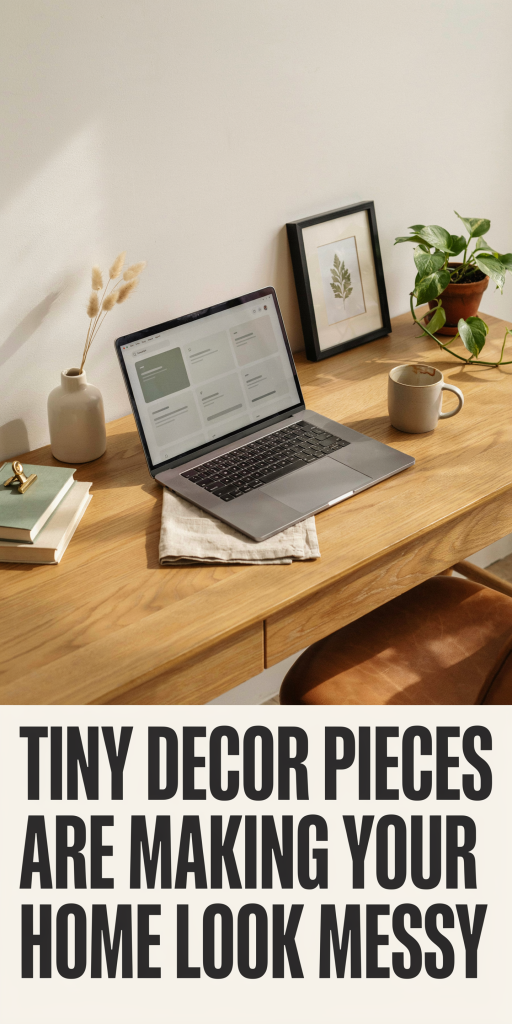
Tiny decor pieces become a problem because we treat them as accents but arrange them like clutter. When several small items accumulate on a surface, a mantel, coffee table, kitchen counter or dresser, they create a visual noise that competes with the room’s structure. We instinctively want to showcase everything we love: souvenirs from trips, sentimental knickknacks, tiny candles, potted succulents. Each item makes sense alone. Together, they turn a curated vignette into a chaotic scatter.
There are practical reasons this happens. Small objects often lack a consistent scale, color palette, or rhythm, so they fail to read as a single unit from a distance. Our eyes search for order, contrast, and a clear focal point: when a surface is dotted with many competing items, our gaze darts around and the room feels unsettled. That sensation registers as “messy,” even if everything is clean and dust-free.
Psychologically, cluttered surfaces raise cognitive load. Studies in environmental psychology show that visual clutter can increase stress and reduce our ability to process information calmly. So those dozen tiny items aren’t merely aesthetic, they affect how we feel in our homes. Recognizing that small decor pieces can be the culprit is the first step toward making our spaces feel purposeful again.
The Design Principles Behind Cluttered Surfaces
To fix the problem, we need to understand the design principles that tiny pieces violate. Three big ideas explain why little objects often read as disorderly: scale and proportion, negative space, and visual hierarchy. When we get these basics right, small items can enhance a room rather than overwhelm it.
Scale And Negative Space: Why Small Items Overwhelm
Scale is about relative size. A single tiny figurine on a large console will disappear: dozens of tiny figurines across that same surface will create a repetitive texture that reads as clutter. Negative space, the deliberate empty area around objects, gives breathing room and highlights the items we want to notice. When we scatter too many small pieces without thinking about the empty space between them, they merge into a visual texture that feels noisy.
Think of negative space as silence in music. A well-placed pause makes the melody more powerful. Without pauses, the music becomes a continuous blur. Similarly, adding or preserving empty zones on shelves and surfaces amplifies the pieces we keep. The rule we like to use: for every object displayed, ask whether it needs 2–3 times its own footprint in negative space to read clearly. If the answer is no, we either group items into a single unit or remove them.
Focal Points And Visual Hierarchy: How Little Objects Steal Attention
Visual hierarchy determines where our eyes land. A room needs a hierarchy, one primary focal point, a couple of secondary ones, and the rest subdued. Small objects often violate this by creating many equal-weight points. Tiny brass animals, a row of small photo frames, a scatter of coasters, they all vie for attention and break hierarchy.
We can regain control by creating deliberate anchors. Anchors are larger pieces or clusters that dominate the scene: a large lamp, an artwork, a sculptural vase. Once an anchor exists, we treat small items as supporting cast, subtle, purposeful, and placed to complement, not compete. Practically, we assign each surface a role: anchor, supporting vignette, or negative space. Tiny pieces are best used as accents within a supporting vignette, not strewn across an anchor surface.
Common Tiny Decor Culprits And Where They Hide
Some small items are sneakier than others. We collect them because they’re affordable, sentimental, or easy to display. Here are the usual suspects and the surfaces where they tend to cluster:
- Nightstands and dressers: stacks of rings, lip balms, novelty boxes, and framed mini-prints. These surfaces become catch-alls for nightly routines and memory objects.
- Coffee tables: coasters, remotes, small decorative bowls overflowing with receipts, candles, and small design objects. Coffee tables live at eye level and are prime real estate for visual noise.
- Entryway tables: keys, sunglasses, random postcards, tiny statuettes. Entries are high-traffic zones, so small items quickly accumulate and scream disorganization.
- Bookshelves: small ceramics, figurines, souvenir shot glasses, and trinkets tucked between books. On a bookshelf, too many diminutive items break the rhythm of vertical lines and book spines.
- Kitchen counters: spice jars, novelty magnets, tiny potted herbs, and kitchen gadgets. Because kitchens are functional, small decor often muddles with tools and utensils.
The pattern is consistent: surfaces we use daily attract small things. The antidote? Pause before placing another tiny item and ask whether it belongs to the surface’s role. If it doesn’t, find it a different home, ideally out of sight, or make it part of a curated cluster.
How To Audit Your Surfaces In 30 Minutes
We can transform a chaotic room quickly with a focused 30-minute audit. The goal is a rapid inventory and decisive action. Set a timer and work surface to surface. Here’s a step-by-step routine that’s efficient and forgiving.
- Clear the surface. Start by removing everything. This momentary blank slate helps us see the surface’s potential rather than its problems. Wipe down the area while you’re at it.
- Sort into piles: keep, store, donate, trash. Don’t overthink, use our quick decision rules (below) to speed choices. Place items in their pile as you go.
- Reintroduce intentionally. Bring back only the items in the “keep” pile and arrange them using the styling strategies we’ll cover. Resist the temptation to bring everything back at once.
- Contain what’s functional. Items we need daily (remotes, keys, chargers) should be given a dedicated tray or container rather than free-floating on the surface.
- Schedule follow-up. If there are sentimental items that require reflection, box them and set a 7-day reminder to decide. Often, time clarifies whether an object is essential.
This audit takes discipline, but it also trains our eyes to distinguish meaningful decor from autopilot clutter. Repeat it seasonally or whenever a surface starts to feel disorganized.
Quick Decision Rules: Keep, Store, Donate, Trash
When we’re speed-auditing, indecision is the enemy. Use these four quick rules to move objects off surfaces fast:
- Keep: The item is beautiful, used weekly, or holds strong sentiment. It fits the surface’s role and complements the room’s palette.
- Store: The item is meaningful but not for display, or it’s seasonal. Box it and label the container. Stored items should be easy to access but off sight.
- Donate: The item is attractive but no longer aligns with our style or needs. If someone else would love it, pass it on quickly, waiting keeps clutter in our homes.
- Trash: Broken, sticky, or beyond practical use. Dispose of these immediately.
A few pragmatic tips: if an item hasn’t been used or admired in six months, it’s probably not worth keeping on display. For sentimental items, ask whether displaying one or two pieces from a collection suffices. Finally, limit the number of “keep” pieces per surface, three to five items is a useful visual rule for many consoles and coffee tables, though some surfaces work with a single anchor piece.
Styling Strategies To Keep Small Items From Looking Messy
Once we’ve pared down, styling becomes the weapon against messiness. The key principles are restraint, containment, and cohesion. Below are tactical strategies we use to make small objects feel intentional rather than scattered.
- Edit ruthlessly. Fewer items mean each one matters. Choose pieces that share a color story, material, or theme.
- Use repetition and rhythm. Repeating a small object in a deliberate pattern (two matching candlesticks or three similar ceramics) reads as design, not accident.
- Anchor with scale. Pair a small object with a larger companion, tall lamp, stack of books, or a sculptural vase, so it feels like a supporting detail.
- Limit finishes. Too many shiny, matte, or metallic finishes fight for attention. Pick one or two finishes per vignette.
- Think in clusters. Instead of scattering several tiny items, group two or three items of varying scale together to form a single unit. Clusters read as intentional and reduce visual fragmentation.
These strategies are flexible. The goal is to create surfaces that feel calm and purposeful without stripping personality. Small objects can still tell stories: we just control how, and where, they speak.
Conclusion
Tiny decor pieces don’t have to make our homes look messy, we just need better rules for how they’re used. By understanding scale, preserving negative space, running a quick 30-minute audit, and using containment and grouping strategies, we can keep the objects we love without sacrificing calm. The next time a surface feels chaotic, start by clearing it, sorting quickly, and reintroducing only the pieces that earn their place. The result: homes that feel intentional, relaxing, and unmistakably ours.