The “Cute and Cozy” Look Is Secretly Making Your Home Feel Chaotic — How To Reclaim Calm Without Losing Warmth
The “cute and cozy” aesthetic, layered blankets, curated knickknacks, mismatched vintage finds, and soft string lights, promises a home that feels lived-in and welcoming. But increasingly many of us notice a mismatch: rooms that look charming in photos yet feel visually noisy, exhausting, or cluttered when we’re actually living in them. We love warmth and personality, but there’s a point where “cozy” becomes chaotic. In this piece we’ll unpack how that shift happens, why our brains respond with stress, and, most importantly, how we can reclaim calm without sacrificing the gentle, intimate character we wanted in the first place. Expect practical fixes we can carry out today and long-term systems to keep the cozy feeling sustainable.
How The “Cute And Cozy” Aesthetic Became So Popular
The rise of the “cute and cozy” aesthetic didn’t happen overnight. It’s the result of several cultural and digital forces converging over the past decade. First, social media platforms rewarded highly styled, approachable interiors, think cottagecore, hygge, and modern farmhouse, giving everyday homes a photogenic blueprint we wanted to copy. Influencers and lifestyle bloggers distilled complex interiors into accessible, repeatable tropes: warm neutrals, rattan baskets, throw layers, and a collection of small decorative objects. That repeatable visual language made it easy to translate into our own spaces.
Second, a broader cultural appetite for comfort after economic and social stresses (recessions, pandemic lockdowns) pushed us toward interiors that signaled safety and softness. Cozy textiles and tactile materials suggested emotional warmth during uncertain times. Third, retail responded: fast-turnaround home brands and affordable décor made it simple to kit out rooms quickly. What used to take a designer’s eye now became a weekend project.
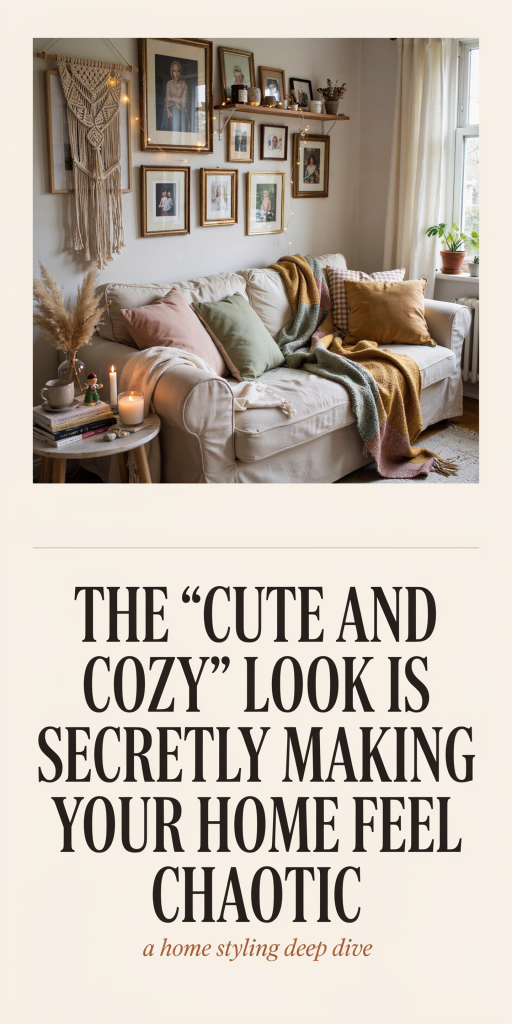
None of this is inherently bad. The aesthetic invites personality and storytelling, and that’s valuable. But the problem emerges when we conflate “more items” with “more cozy.” Because the visual shorthand is compact and repeatable, many homes started accumulating the same elements across rooms: pattern after pattern, shelf after shelf of objects, and layered surfaces that leave no breathing room. When every surface is curated, nothing stands out: instead, everything competes for attention. Over time the cumulative effect is visual noise that undermines the original goal: a calm, welcoming home.
Design Elements That Look Charming But Add Visual Noise
The charm of the cute-and-cozy look lies in detail. Those same details, but, are what create the chaos. Below we break down the most common offenders and explain why they escalate into visual clutter, and what to watch for as we edit our spaces.
Pattern, Color, And Excessive Curation
Patterns and color are powerful tools: a floral pillow or patterned rug can transform a room instantly. The trouble starts when we layer multiple active patterns and saturated colors without a coordinating strategy. A single patterned throw, a patterned wallpaper, printed curtains, and patterned upholstery, stacked together, create visual competition.
Our eyes hunt for order. When too many patterns vie for dominance, our visual system keeps scanning to resolve conflicts, which is mentally tiring. Excessive curation, dozens of small decorative objects arranged on floating shelves, mantelpieces crowded with framed photos, and walls covered in small-scale art, does something similar. Each object demands attention, and collectively they form a “visual playlist” that never stops.
We can keep pattern and color, but we need rules: limit active patterns to one or two per room, choose a restrained palette that repeats across surfaces, and temper saturated tones with quiet neutrals. Think of restraint as a design tool, not deprivation. With fewer competing elements, the details we cherish actually become more expressive.
The Psychology Of Cluttered Coziness: Why It Feels Stressful
Our brains are wired to seek patterns and prioritize new information. Environments that present excessive, competing stimuli force our attention to remain active rather than letting it relax. That’s why a room covered in ‘cute’ items can feel energizing in a photo but mentally fatiguing in real life.
There’s also a cognitive load component. Visual clutter increases the number of decisions, even tiny ones, we subconsciously make throughout the day. Where do we set our coffee? Which shelf is for mail? Over time, these tiny decision points accumulate and raise stress levels. Research in environmental psychology has shown that cluttered spaces correlate with higher cortisol levels and decreased focus. That’s not just theoretical: many people report feeling lethargic, distracted, or anxious in rooms that look otherwise appealing.
Emotional attachment complicates editing. Sentimental objects make us reluctant to remove anything, so we tolerate visual noise to avoid loss. But we can be selective: keeping emotionally significant items while editing their display reduces daily cognitive load and preserves the stories we value. The goal is to create an environment that supports restful attention and meaningful interactions, not one that continuously demands our awareness.
Quick, Practical Fixes To Tone Down Visual Chaos Without Losing Warmth
We don’t have to overhaul the whole house to quiet a noisy aesthetic. Here are targeted, low-effort fixes we can carry out this weekend to reclaim calm while maintaining that cozy vibe.
- Edit Surfaces One at a Time
Pick one surface, a coffee table, mantel, or entry console, and remove everything. Put back only 2–4 items with varying heights: a plant, a single stack of books, and one decorative object. The contrast between the cleared area and the curated trio will feel instantly calmer.
2. Create Neutral Backdrops
Introduce a few quiet, neutral surfaces (plain slipcovers, a solid rug, or untextured curtains). These act like negative space in a painting and let textured or patterned items read as accents instead of competing anchors.
3. Group Objects into Vignettes
Instead of scattering small objects across every shelf, gather them into two or three well-considered groupings. Use odd numbers (three is classic), vary heights, and keep the color palette tight. This reduces visual ‘peppering’ and makes each vignette feel intentional.
4. Reduce Pattern Frequency
If a room has multiple patterns, mute one or two by swapping them for solids. For example, if the rug and curtains are active, choose a solid throw and a simple pillow to balance the composition.
5. Introduce Clear Storage
Baskets with lids, storage ottomans, and woven trays let us keep everyday items out of sight while retaining easy access. Concealment reduces the sense of visual busyness without removing the lived-in functionality we want.
6. Define One Anchor Per Room
Decide what the room’s primary focal point is and arrange furniture and decor to emphasize it. If it’s the fireplace, keep surrounding surfaces quieter so the fireplace becomes the calming center.
7. Light Layering With Restraint
Warm, layered lighting is part of the cozy appeal. Swap multiple small lamps with a couple of larger, softer light sources. Dimming capability helps us control intensity without sacrificing warmth.
Implementing a few of these changes can make the difference between a home that feels lovingly curated and one that feels overstimulating. The key is intentional restraint rather than wholesale removal of the things we enjoy.
Long‑Term Strategies For A Calm, Cozy Home (Editing, Storage, And Cohesive Systems)
Long-term calm comes from systems, not one-off edits. We want routines and design rules that let the cozy aesthetic age well and stay livable. Below are strategies we can adopt to make warmth sustainable.
- Adopt a Seasonal Editing Habit
Every season, spend an hour editing a room. Rotate decor, reassess sentimental items, and store pieces that aren’t in active rotation. Seasonal edits prevent accumulation and create anticipation for ‘new’ displays without buying more objects.
2. Create a Cohesive Palette and Material Story
Decide on a muted palette of 3–5 colors and 2–3 primary materials (wood, linen, clay). When new items enter the home, use this framework as a quick vetting tool: does this fit the palette and materials? If not, it’s probably noise.
3. Invest in Concealed Storage That Complements the Look
Choose storage solutions that reinforce the aesthetic, woven baskets, wood-paneled cabinets, upholstered benches with compartments, so function doesn’t feel like a design compromise. Concealed storage is particularly important in high-traffic zones like entries and living rooms.
4. Limit Surface Real Estate for Small Objects
Designate specific shelves or small tables for decorative objects and keep larger surfaces clear. When you limit the available display area, you force more thoughtful composition and fewer scattered items.
5. Make Display Rotations a Ritual
Instead of keeping every object on display, commit to rotating a selection monthly. This keeps displays fresh and reduces the need to show everything at once. Rotations also let cherished items shine periodically rather than constantly blending into the background.
6. Teach Household Rules for Everyday Clutter
If we share the home, align on simple rules: two items per person on the coffee table, daily 5-minute reset in the evening, or a family basket for everyday mail that gets emptied weekly. These small behavioral systems dramatically reduce cognitive load over time.
7. Prioritize Quality Over Quantity
When we invest in fewer, higher-quality pieces, a well-made sofa, a hand-thrown vase, they anchor the room more convincingly than many inexpensive objects. Quality pieces age better and require less replacement, which reduces future clutter cycles.
8. Consider Negative Space as a Design Element
Treat empty areas as deliberate choices. Negative space highlights texture and color and gives eyes a place to rest. We’ll find that a single, meaningful object on a cleared shelf often reads as more intentional than a crowded arrangement.
Over time, these systems create an environment that feels cozy by design rather than by accumulation. We keep the warmth and personality we love, but we also build a home that supports focus and rest.
Conclusion
The cute-and-cozy look offers a valuable promise: homes that feel warm, personal, and inviting. Yet without thoughtful limits, that same aesthetic can slide into visual chaos and daily friction. By applying simple editing rules, prioritizing cohesive palettes and materials, and building repeatable storage and rotation systems, we can keep the intimacy of cozy interiors while reclaiming calm. Let’s choose restraint as a design tool, not because we want sterile spaces, but because we want our homes to be restful, intentional, and truly livable.