Calm Coastal Modern: Practical Styling Ideas for an Effortless Beach House

A relaxed, modern beach house feels light, welcoming, and purposeful without requiring constant tinkering. The goal is to shape rooms that breathe — bright surfaces, tactile materials, and a few well-chosen accents — so spaces feel both welcoming and easy to live in.
This guide walks through durable choices, simple styling strategies, and small maintenance habits that keep a coastal-modern home looking fresh. It focuses on practical decisions that create a cohesive look without overcomplicating day-to-day living.
1. A Focused Color Strategy That Lets Light Shine
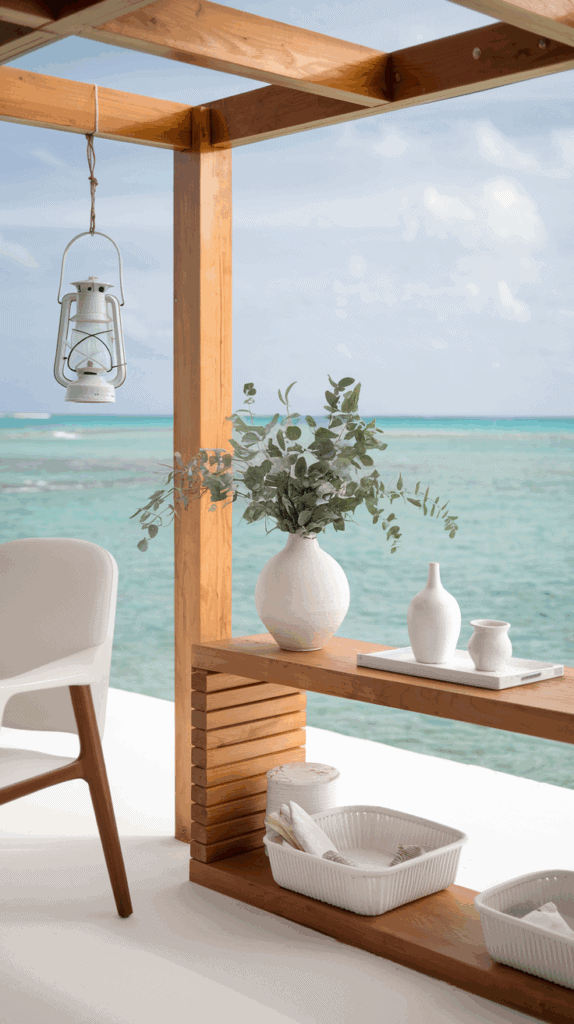
Start with a restrained palette to maximize the sensation of airiness. Opt for soft neutrals—warm whites, sand tones and pale greys—as the primary canvas. Add restrained coastal notes, such as muted aqua or soft green, in one or two accent pieces rather than across every surface. This keeps the room visually calm and allows natural light to become the dominant design element. Limiting the number of competing colors helps anchor furnishings, textiles, and artwork so every piece reads as intentional rather than cluttered. Consider repeating a single accent tone across different finishes—for example, a pale blue in a cushion, a small vase and a piece of art—to make the scheme feel cohesive without overloading the eye.
2. Layering Textures Instead of Competing Patterns
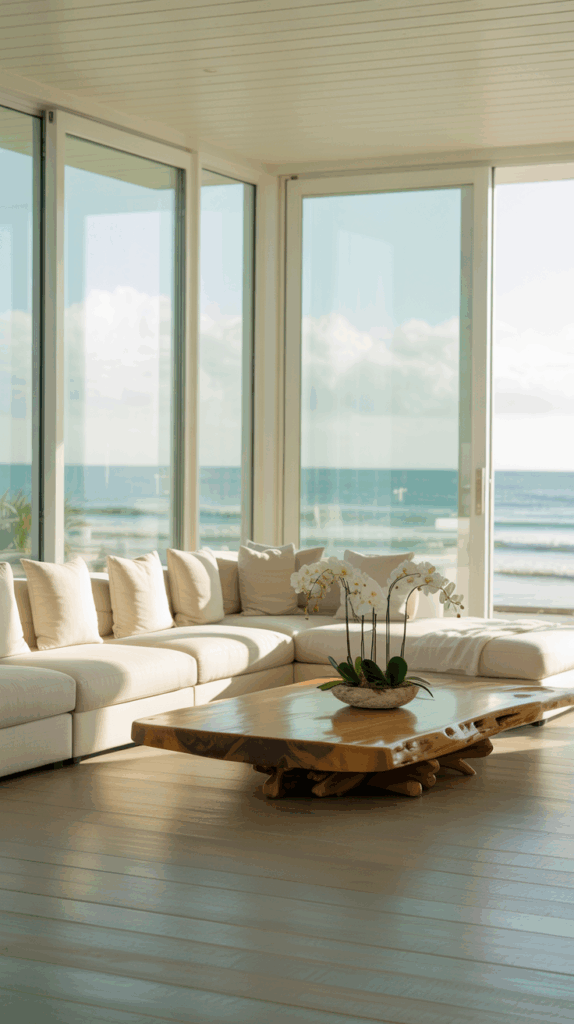
When aiming for a modern coastal vibe, texture provides interest without visual noise. Combine linen upholstery, woven rattan, smooth wood and a natural-fiber rug to create depth that invites touch. A soft, slubby linen pillow, a lightly weathered wood coffee table and a chunky knit throw give the same variety as busy patterns but with a calmer result. Texture also helps define zones in open plans—place a jute rug under seating and a low-sheen runner in the entry. Keep patterns minimal and scale them thoughtfully: if a throw or cushion has a subtle stripe, let surrounding elements remain solid to maintain a tranquil rhythm.
3. Choose Clean-Lined, Comfortable Furnishings
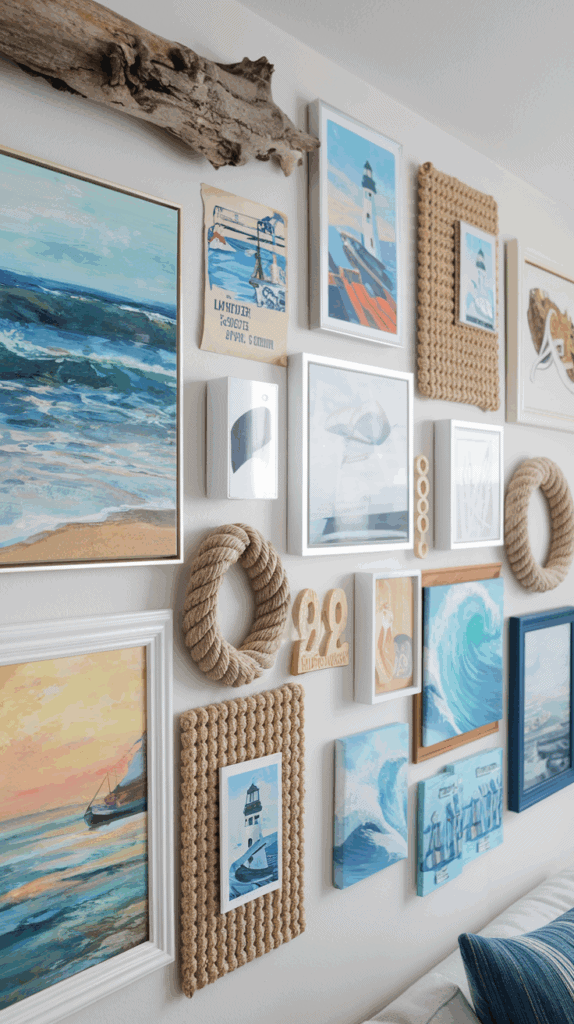
Select furniture with streamlined silhouettes that still prioritize comfort. Low-profile sofas, simple platform beds and light-framed lounge chairs convey modernity while remaining welcoming. Avoid ornate or overly heavy pieces that visually dominate a beachy interior. Durable, neutral upholstery with removable covers is practical for seaside living and simplifies upkeep. Balance scale and proportion so seating doesn’t block sightlines to windows or the outdoors—this preserves the feeling of openness. Finally, choose multiuse pieces, like an ottoman that can be seating or a coffee table with storage, to keep the look uncluttered.
4. Lighting and Window Treatments to Enhance Air and View

Natural light is a key asset in coastal homes—plan to maximize it. Use sheer, lightweight window treatments that filter glare while allowing breezes and views to pass through. Keep heavy draperies for bedrooms where privacy or insulation is needed; otherwise, let daylight be central. Layer lighting with a mix of overhead fixtures, task lamps and lower-level mood lights to keep evenings soft and welcoming. Fixtures made from natural materials—sea-grass pendants, wooden tripod lamps or woven shades—add texture and follow the relaxed palette while serving functional roles.
5. Create Seamless Indoor–Outdoor Living
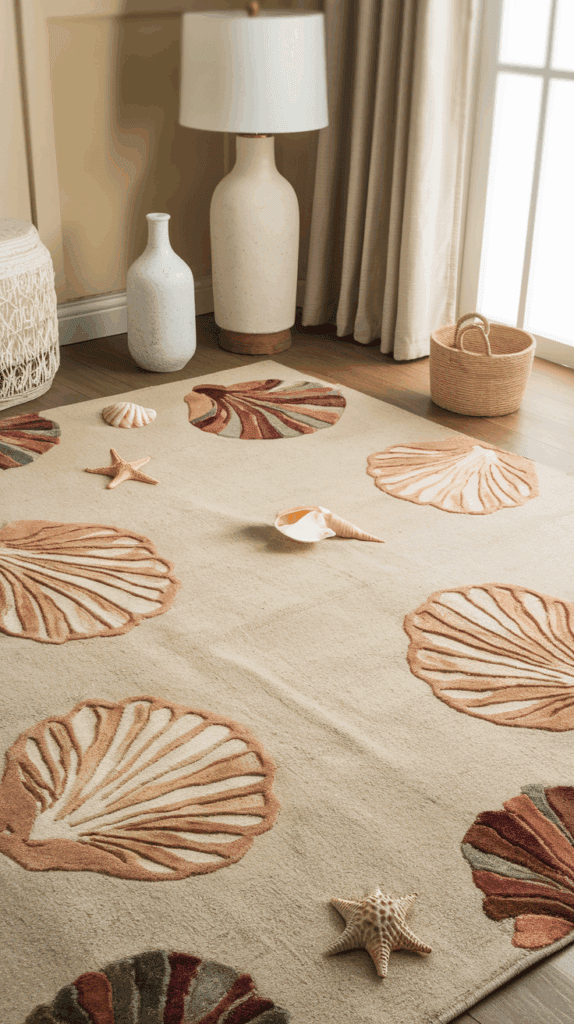
Treat decks, patios and balconies as extensions of interior rooms to enlarge living spaces. Use weather-resistant furniture in similar tones and lines to indoor pieces so the transition feels intentional. Durable textiles designed for outdoor use can mirror indoor cushions, and potted plants like palms or succulents introduce greenery that complements coastal surroundings. Define zones with rugs and planters to create social areas and quiet corners. Prioritize easy maintenance: choose fabrics and finishes that stand up to salt air and sand, and keep pathways clear for comfortable movement between inside and out.
6. Curate Accessories with Purpose and Restraint

Accessories should act as thoughtful accents rather than a collection of small items. Limit display to a few well-sized objects—a single large art piece, a sculptural driftwood object or an elegant bowl—so each item can be appreciated. Functional decor, such as woven baskets for storage, ceramic trays for keys, or attractive jars for utensils, reduces clutter while contributing to style. Avoid literal, themed clutter (for instance, an abundance of tiny shells or novelty signs); instead, pick pieces that read modern and timeless and that complement the room’s materials and colors.
7. A Simple Room-by-Room Approach

Tackle styling one room at a time to keep decisions manageable. In living areas, orient seating to maximize views and conversation, using rugs to anchor groupings. Bedrooms benefit from a pared-back palette and layered bedding in breathable fabrics to enhance restfulness. Kitchens and dining spaces should prioritize durable surfaces and uncluttered countertops—open shelving can work if items are arranged neatly and consistently. Outdoor rooms should mirror indoor textures and remain ready for guests with easy-to-clean cushions and tucked-away storage for seasonal items.
8. Low-Effort Refreshes and Maintenance Habits
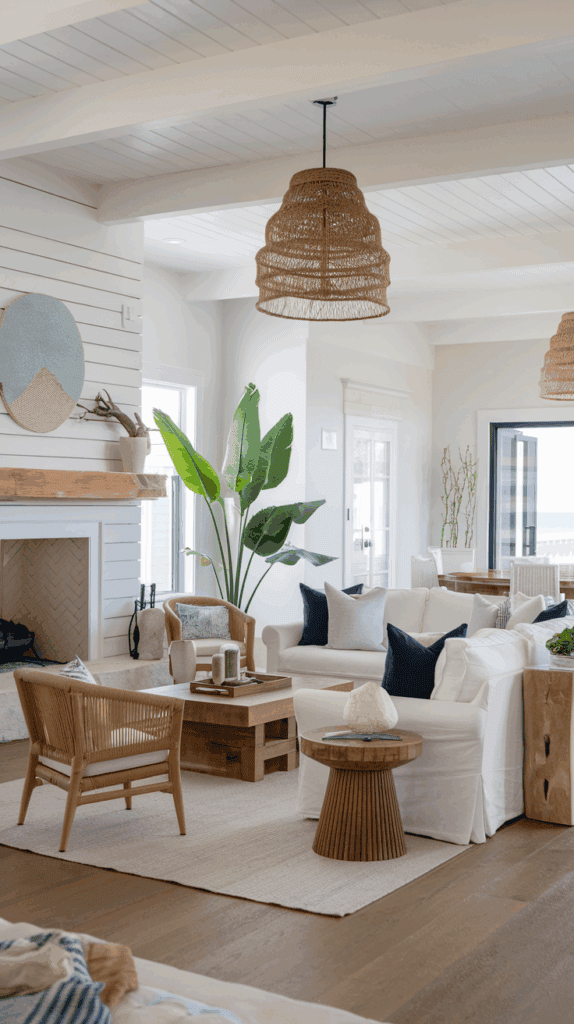
Maintaining a coastal-modern look is easier with a few small routines. Rotate a handful of seasonal accessories—swap cushion covers, change a vase arrangement, or trade a throw—to keep rooms feeling current without a full redesign. Invest in durable base pieces so updates are limited to textiles and small objects. Regularly declutter surfaces and corral small items in baskets to preserve the open feel. Finally, choose materials that age gracefully; natural wood and woven fibers often look better with gentle wear, which adds to a relaxed, lived-in aesthetic.
Final Thoughts
Creating a modern beach house atmosphere is about clarity and comfort: a restrained palette, tactile natural materials, functional pieces, and a few meaningful accents. With small, deliberate choices and simple upkeep, the home will feel breezy, welcoming, and effortlessly put together for seasons to come.