Coastal Boho at Home: Practical Tips for Calm, Textured Beach-Style Living
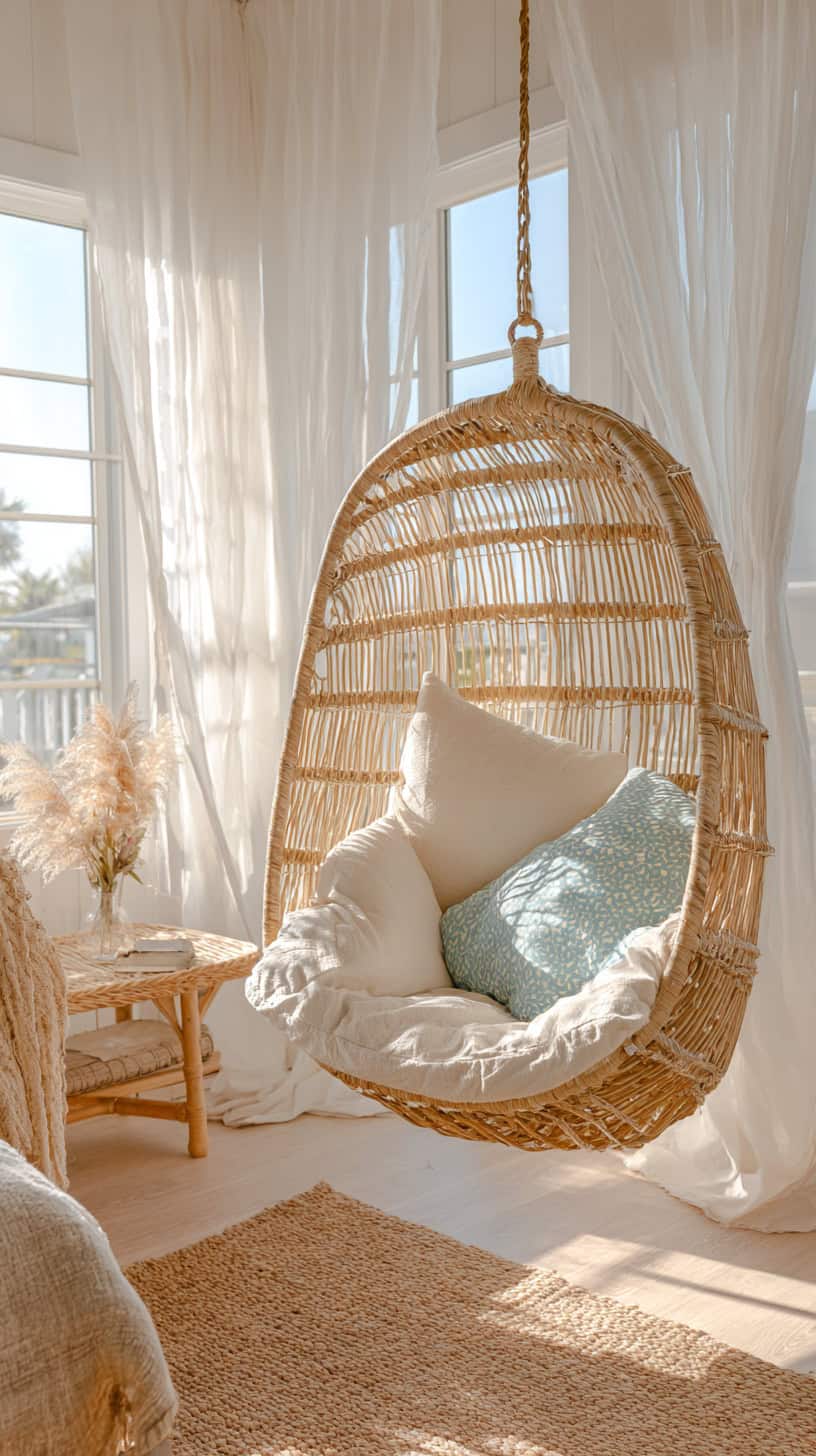
A relaxed boho-meets-coast home feels effortless because it leans on natural materials, soft color palettes, and a lived-in sense of comfort. The goal is not to over-design but to layer tactile elements—woods, woven fibers, airy fabrics—and thoughtful accessories so each room reads as welcoming and unhurried.
This guide breaks down approachable, family-friendly ways to bring that seaside tranquility indoors and outdoors. Each section focuses on a practical element—what to choose, how to place it, and simple maintenance—so the result is both stylish and durable for everyday life.
1. Build a Neutral, Textured Foundation
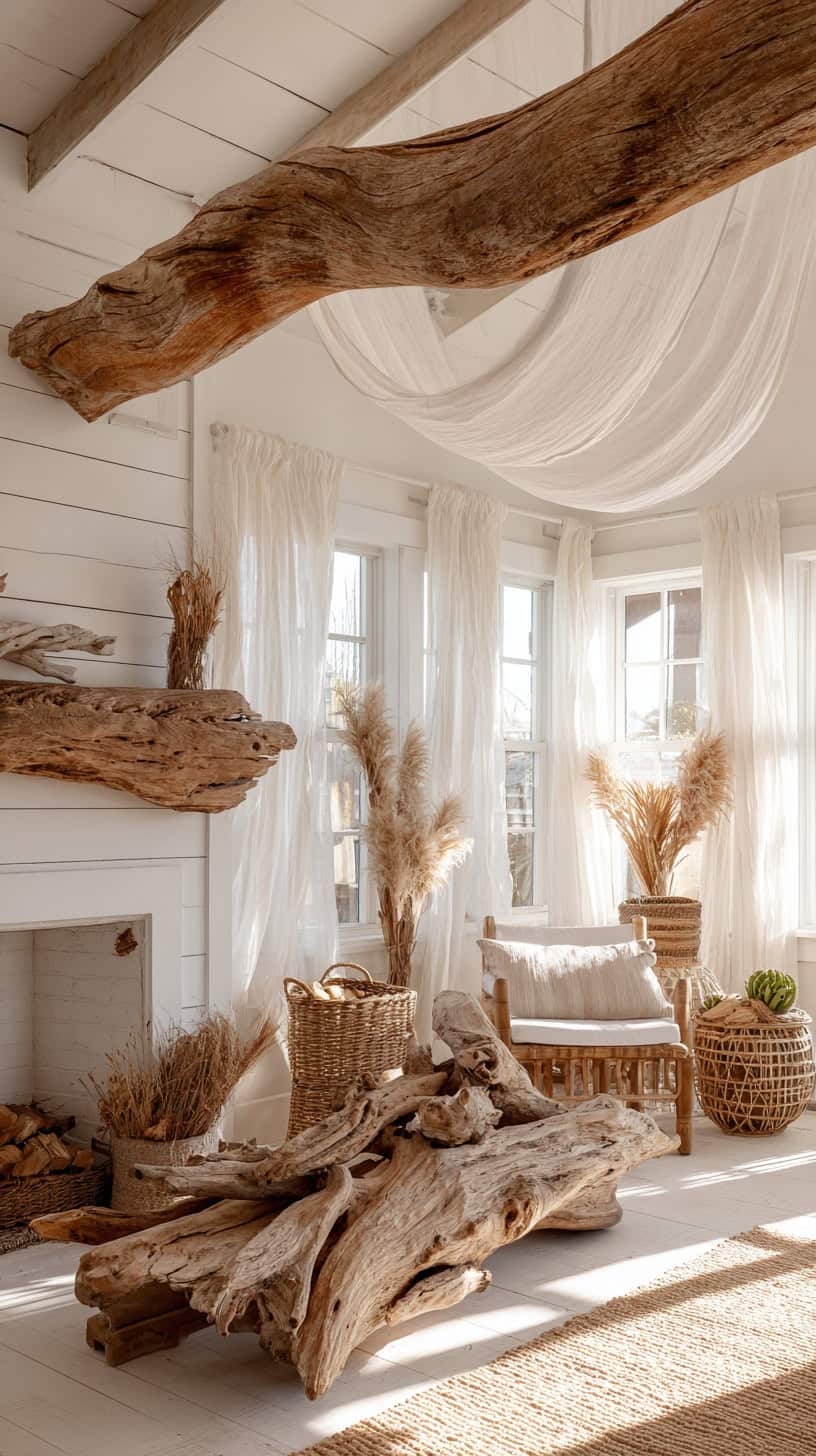
Start by establishing a calm, neutral base that allows natural textures and accents to stand out. Paint walls in soft whites, warm creams, or very pale sand tones to reflect light and make spaces feel larger. Choose flooring or large-area rugs in understated hues—light wood floors, bleached oak, or flatwoven jute rugs work especially well. Keep major pieces like sofas or beds in simple silhouettes and neutral fabrics so they act as a backdrop for layered accents. This approach makes seasonal swaps easy; changing pillow covers, throws, or small accessories refreshes the room without a full redesign. For practical living, pick easy-to-clean base fabrics and finishes that tolerate sandy feet and high traffic, and plan furniture placement for circulation to keep spaces airy and functional.
2. Layer Natural Fibers for Warmth and Durability
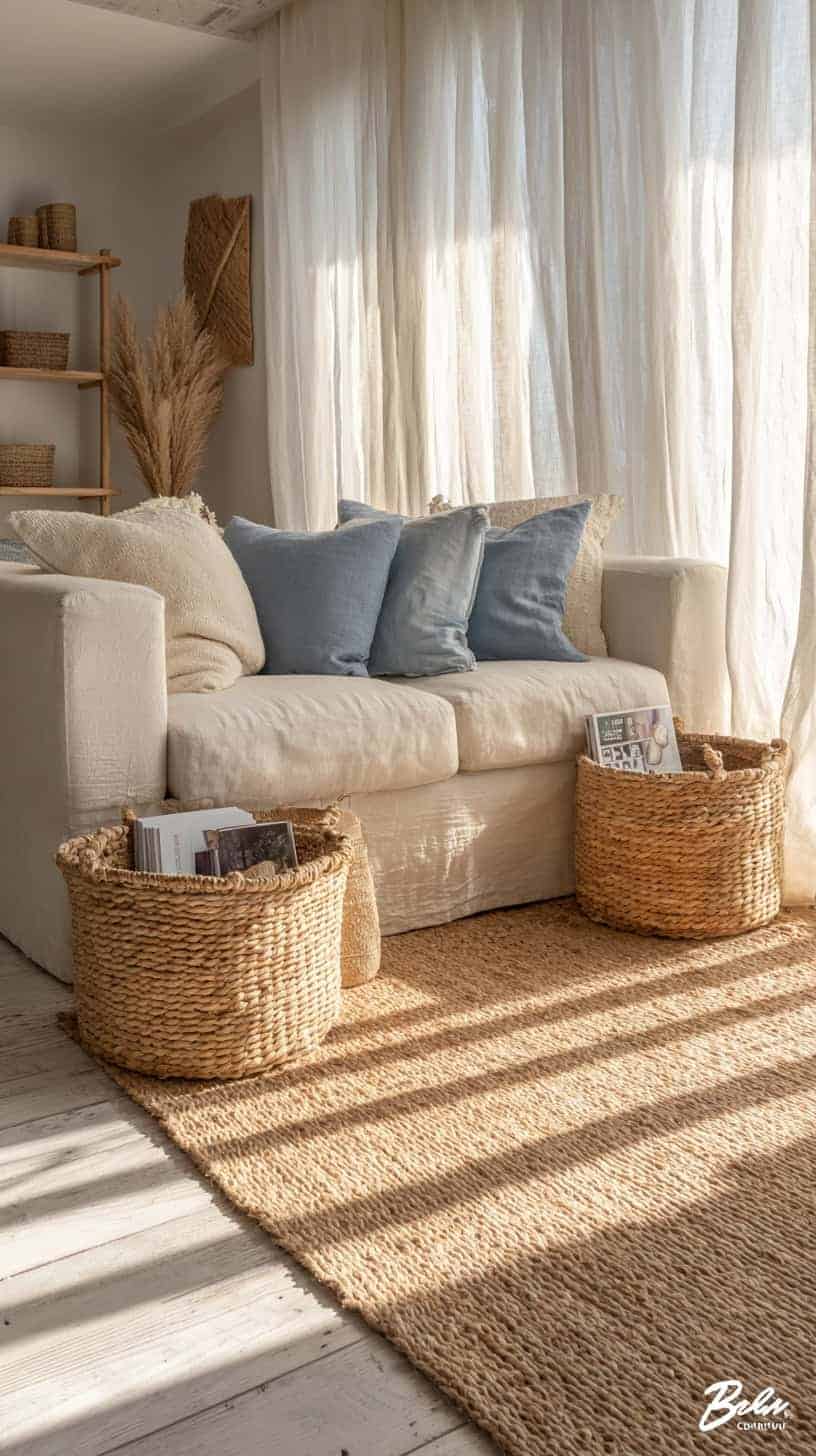
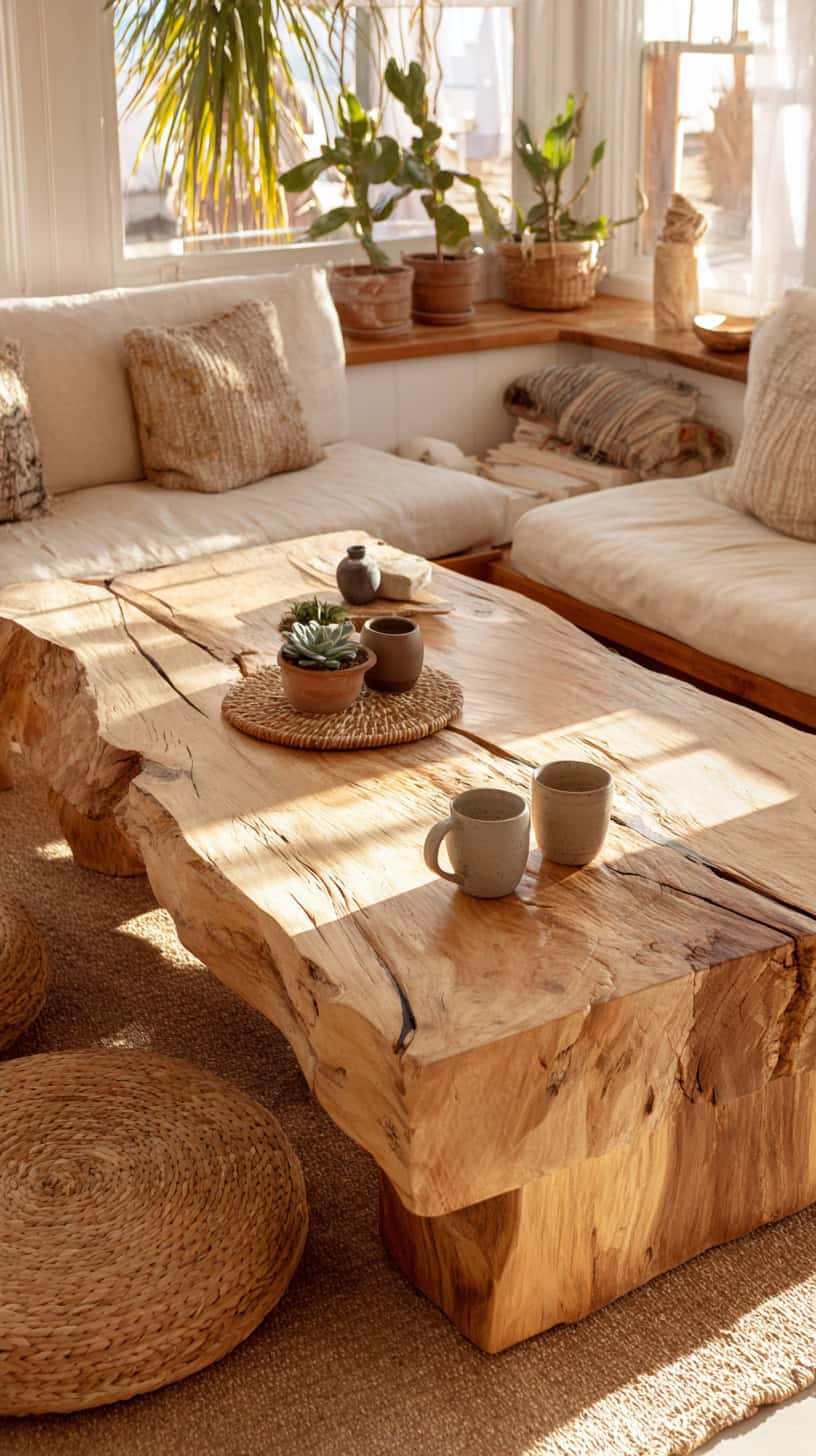
Mixing natural fibers creates the signature tactile depth of boho coastal style: think jute, sisal, linen, and woven rattan. Place a durable jute or seagrass rug under a seating area to define the zone and add earthy warmth. For softness, layer a lighter cotton or wool rug over part of the jute to prevent it from feeling too rough underfoot. Use woven baskets for toy and blanket storage—these keep clutter contained while adding texture. In high-use rooms, select tightly woven jute blends that resist shedding and choose rugs with low pile for easy cleaning. When mixing fibers, balance scale and color: large coarse-weave pieces anchor the room while finer knits and linens add softness and contrast. This combination is both inviting and forgiving for family life.
3. Choose Relaxed Seating with Organic Shapes
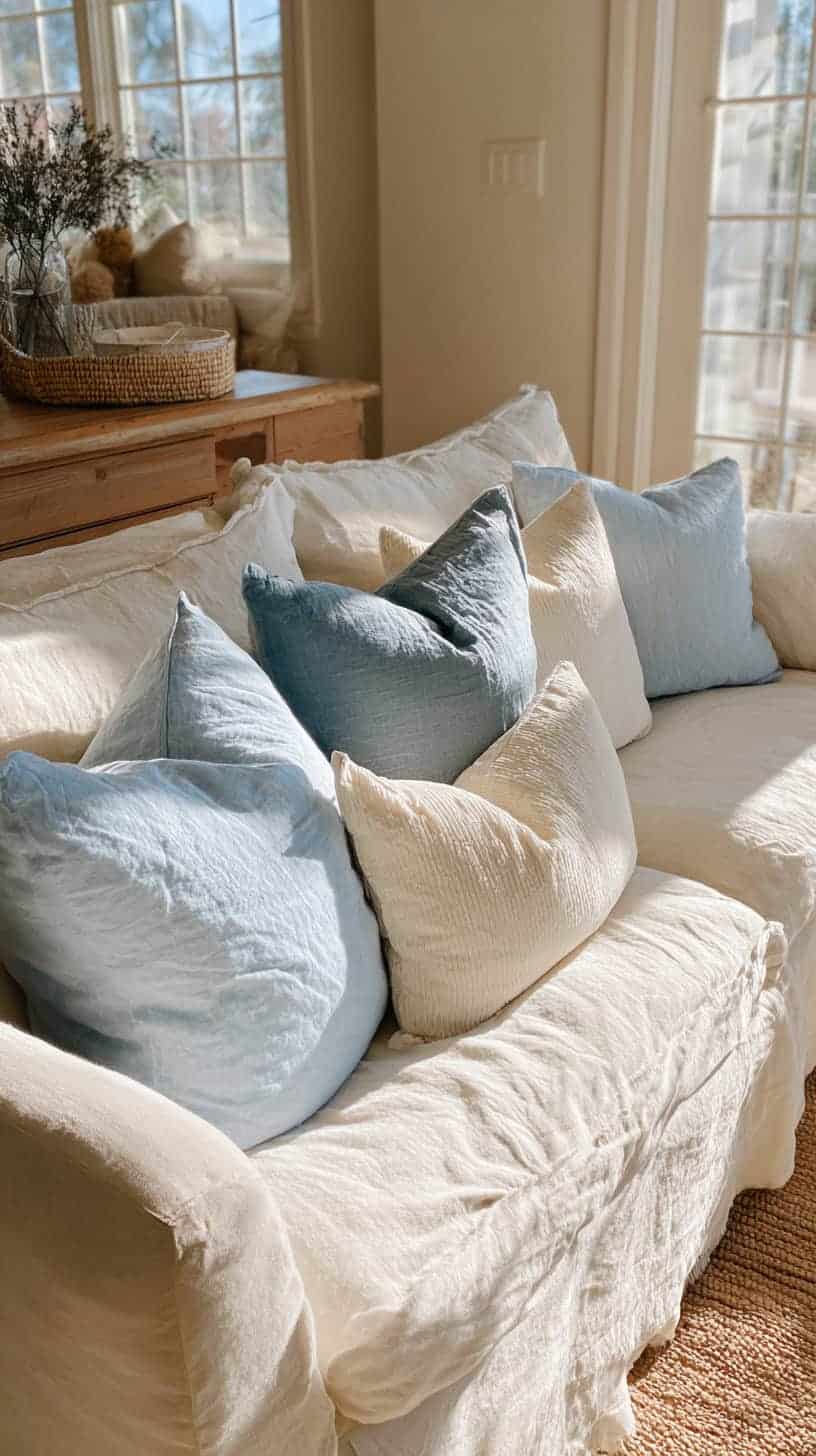
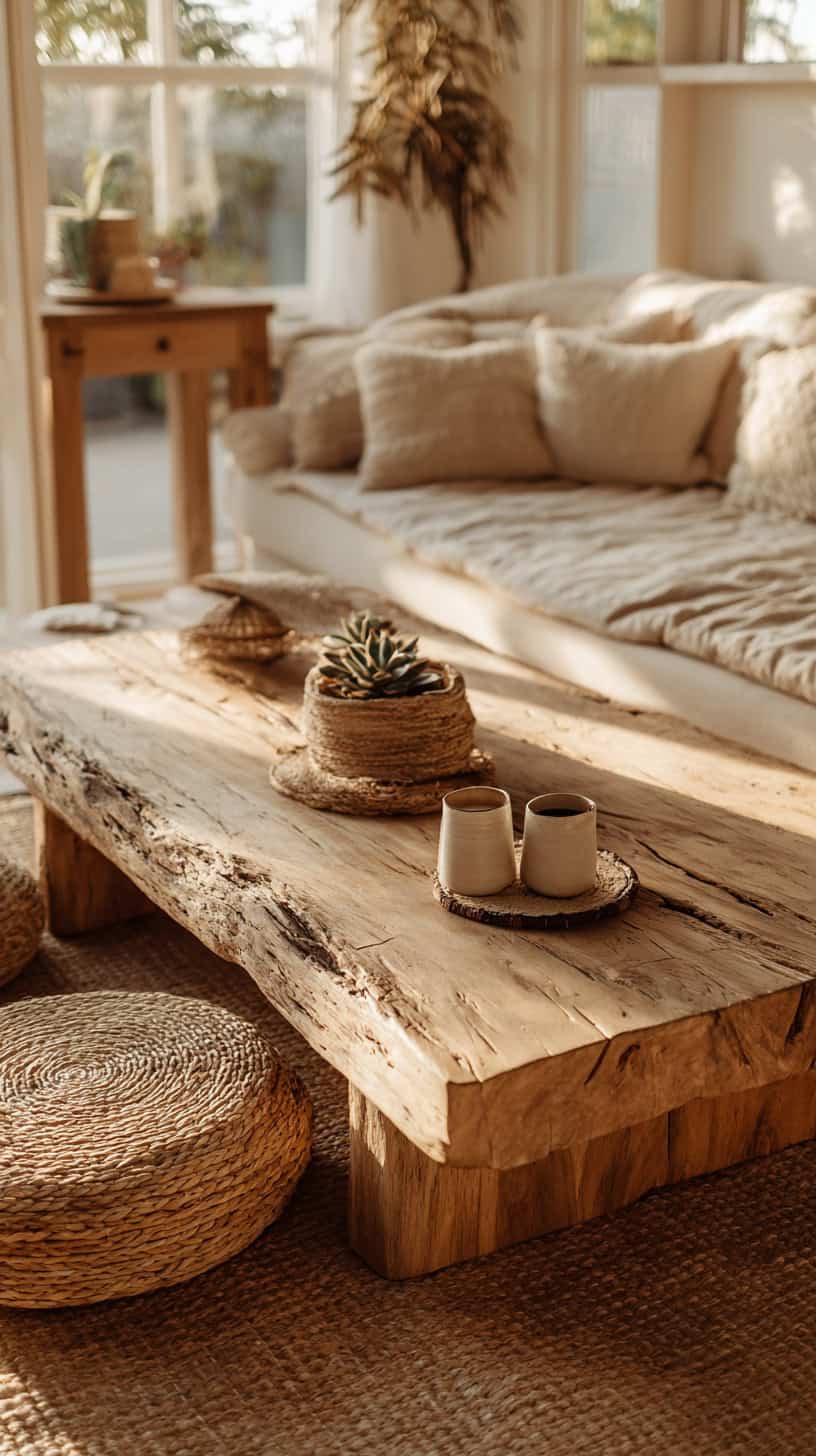
Opt for seating that reads casual and comfortable rather than overly formal. Woven rattan chairs, slatted wood benches, and oversized lounge sofas with removable covers are ideal because they combine natural form with practical maintenance. Introduce a hammock chair or a hanging rattan egg seat in a sunny corner to provide a playful spot for reading or quiet time—secure mounting and weight limits are essential for safety. Pair seating with a sturdy natural-wood coffee table or stools that show grain and character; reclaimed or live-edge pieces add visual interest and are tolerant of everyday use. Arrange seating in conversational groupings and consider family routines—places to pile on blankets for movie nights or easily reachable surfaces for drinks and snacks—so the layout supports how the household actually lives.
4. Textiles That Breathe: Curtains, Bedding, and Pillows
Light, breathable textiles are central to a breezy beach-boho mood. Choose sheer white or lightly hued curtain panels to filter sunlight and impart movement; hang rods higher and wider than window frames to make windows appear larger. For bedding, layered linen in neutral tones creates a relaxed, lived-in look that also handles coastal humidity well—combine fitted sheets, a midweight duvet, and a textured throw at the foot of the bed. Accent pillows in soft blues and sandy neutrals bring subtle coastal color without dominating the palette; mix fabrics such as linen, cotton, and crochet to add depth. Select pillow covers with zippers for easy washing and rotate cushions regularly to extend longevity. For homes that open to the beach, choose textiles that are machine-washable and quick to dry.
5. Handcrafted Wall Art and Sculptural Accents
Incorporate artisanal pieces that highlight texture and craft: macramé hangings, driftwood sculptures, woven wall panels, or hand-carved wood frames provide tactile focal points. These elements offer a handcrafted touch that complements natural materials and soft colorways. Use a single large statement piece over a sofa or bed, or group several smaller items into a curated cluster for visual interest. When combining materials, balance organic shapes with negative space so walls don’t feel cluttered. Hanging plants in macramé holders adds vertical greenery and keeps the look fresh. For longevity, secure heavier pieces with appropriate anchors and avoid hanging delicate items where they could be bumped in high-traffic zones.
6. Curate Coastal Collections with Restraint
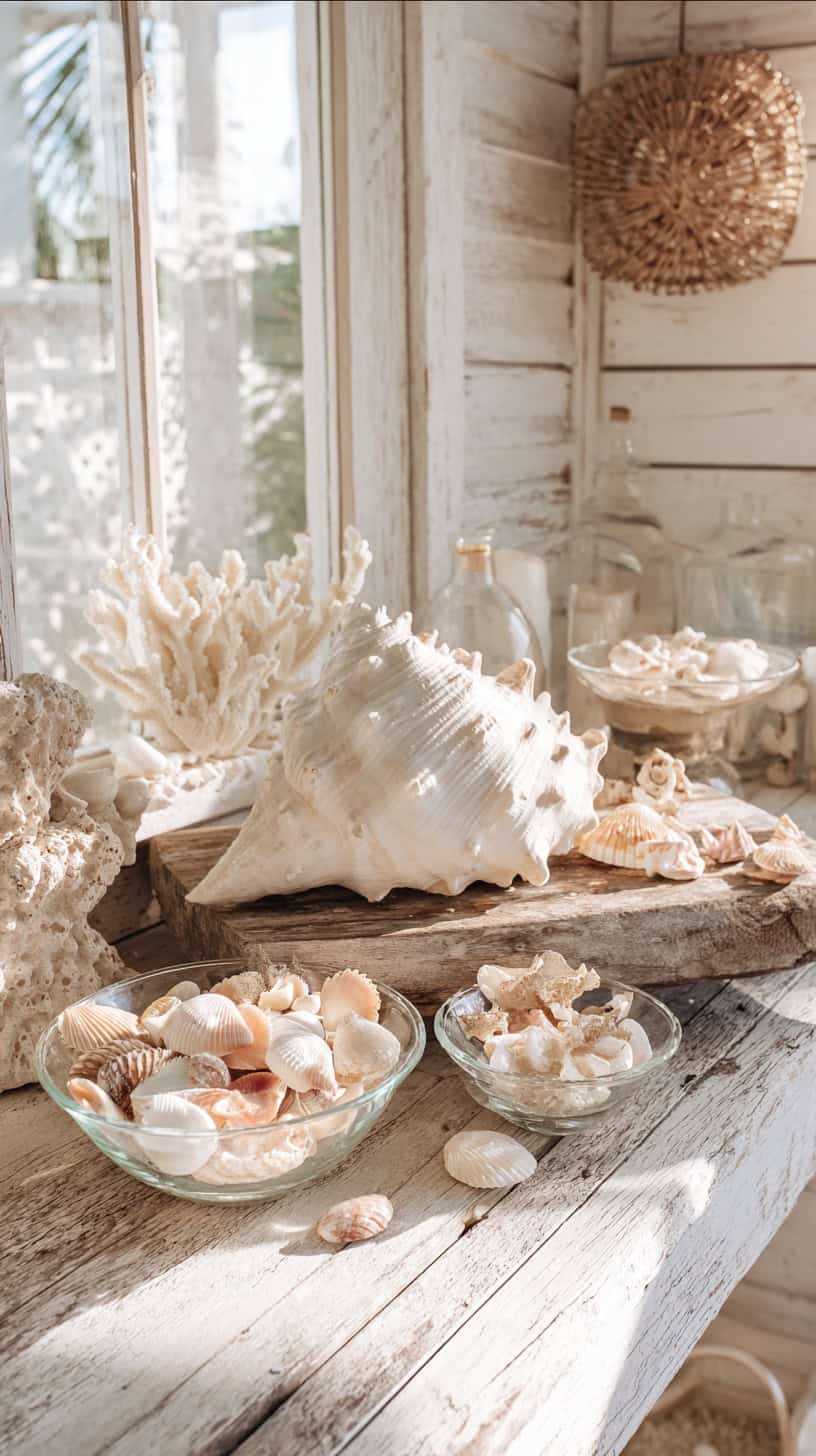
Bring beach finds into the home in a thoughtful, edited way so collections feel meaningful rather than cluttered. Display a few favorite shells or a strand of bleached coral in glass bowls or shallow trays, pairing them with candles or books to create composed vignettes. Save oversized or fragile items for mantels or protected shelves, and consider shadow boxes for small, sentimental keepsakes. When styling shelves, mix horizontal and vertical elements—stacks of books, terracotta pots, and small sculptural objects—to maintain balance. Store the bulk of collected items in labeled boxes so rotating the display remains simple and easy. This restrained approach keeps the coastal theme anchored and personal without becoming theme-park literal.
7. Extend the Living Space with a Casual Outdoor Room
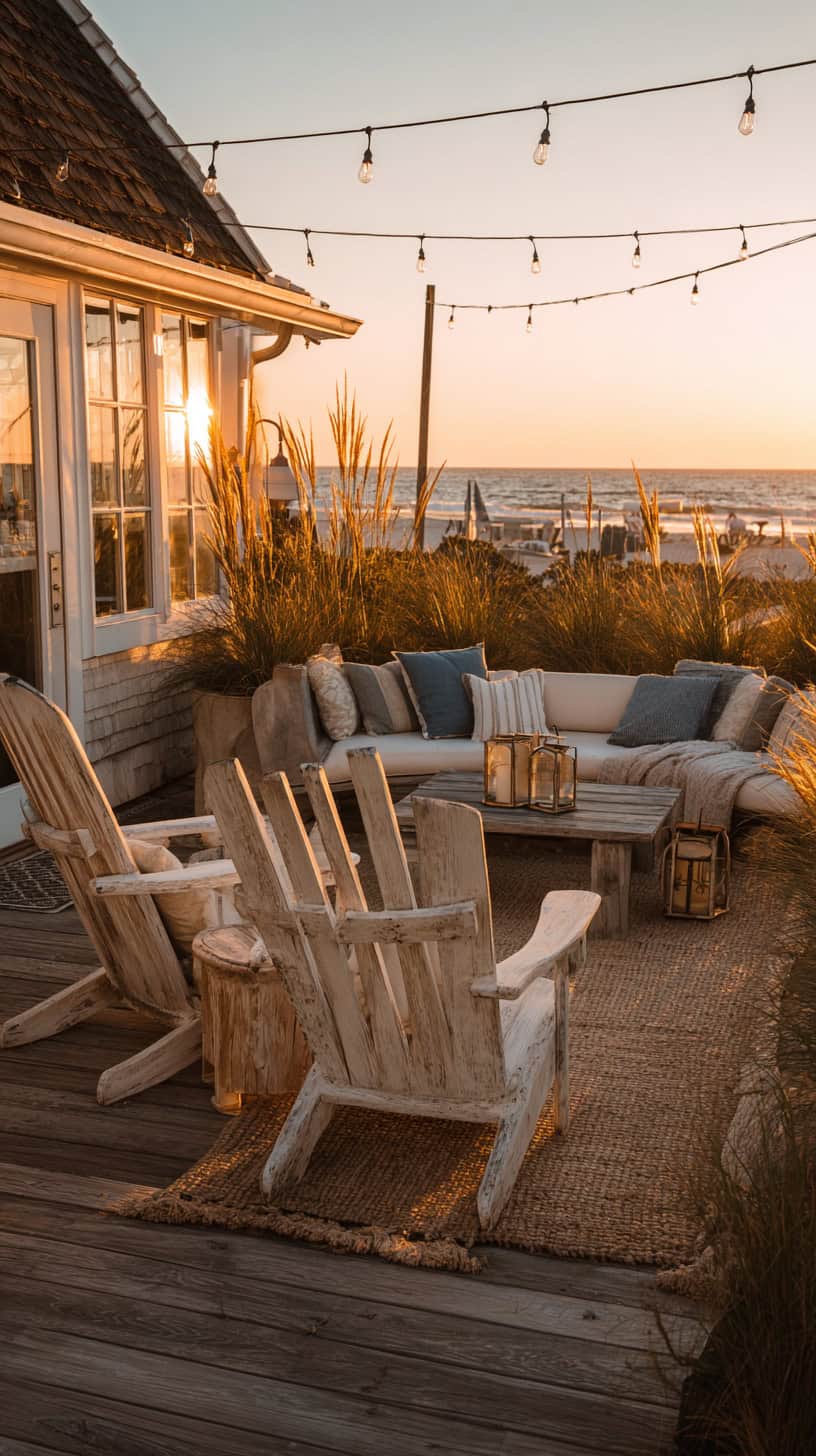
Treat patios and porches as additional living rooms by mirroring indoor textures and colors outside. Use weather-resistant versions of natural materials—synthetic wicker, teak, or powder-coated metal—paired with outdoor rugs in jute styles and cushions in fade-resistant fabrics. Anchor seating with a low coffee table and ambient lighting like string lights or lanterns for evening use. Add potted palms, grasses, or succulents to soften hardscapes and introduce movement. Plan for convenience: a tray or small side table for drinks, storage for extra blankets, and a covered area for protection from sun and spray. Creating a flexible outdoor layout encourages dining, lounging, and play while reinforcing the easy rhythm of coastal boho living.
Final Thoughts
A successful boho coastal home balances natural materials, light colors, and carefully chosen accents to create a calm, lived-in atmosphere. Prioritize durable, washable textiles and simple storage solutions so the space remains inviting for everyday family life. With layered textures and a few curated coastal pieces, a relaxed beach-inspired home can feel both stylish and effortlessly comfortable.