How to Build a Calm Coastal Farmhouse Living Room: Practical Design Ideas

A living room that blends coastal breeziness with farmhouse warmth creates a welcoming space where comfort and character coexist. Focus on a muted color palette, textured materials, and carefully chosen accents to achieve a relaxed look that still feels intentional and polished.
Start by identifying a few foundational elements—wall treatment, primary seating, and a reliable area rug—and layer in functional storage and curated accessories over time. The goal is a lived-in, easy-to-maintain room that invites people to linger without appearing cluttered or overly styled.
1. Foundational Palette: Soft Neutrals with Coastal Blues
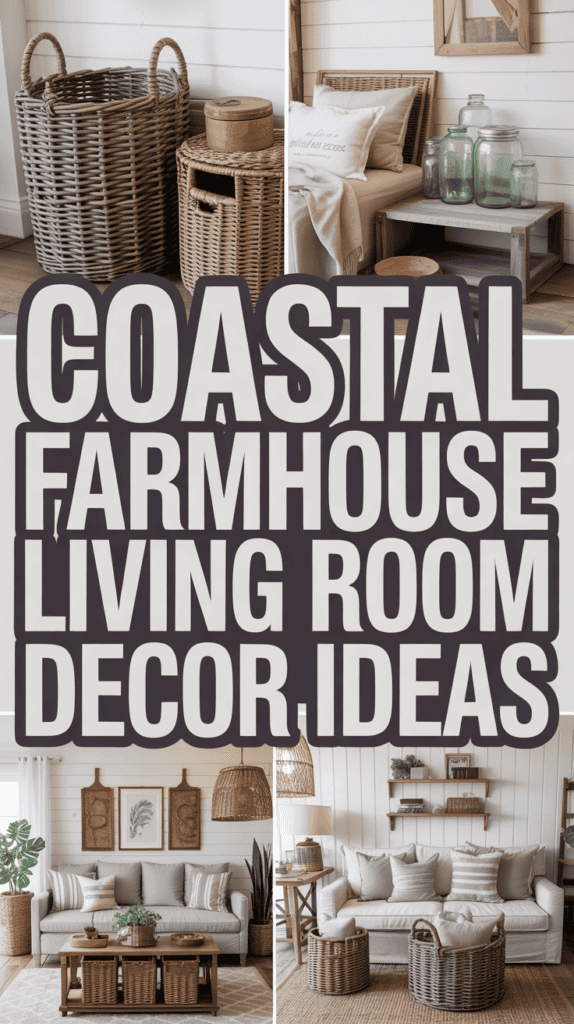
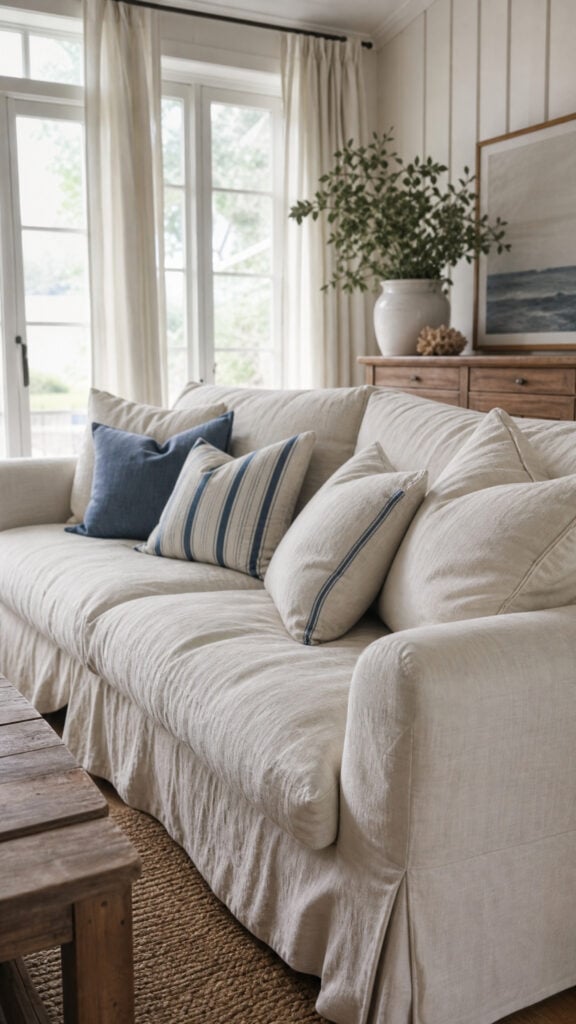
Establish a calming base using warm whites, soft beiges, and subtle blue tones to evoke coastal air without relying on bright seaside clichés. Paint walls in a creamy white or pale sand and introduce blues through textiles—pale sky, muted navy, or seafoam for variety. Balance cool blues with warm wood finishes and natural fibers so the room reads as inviting rather than stark. Keep large pieces neutral to allow small seasonal swaps (pillows, throws, art) to shift the mood easily without a full redesign.
2. Walls and Architectural Details That Add Quiet Texture

Textured wall treatments are an efficient way to create interest without heavy ornamentation. Consider horizontal planks, shiplap-style panels, or a whitewashed brick treatment to introduce subtle shadows and depth. For media walls, a textured backdrop can make a screen feel integrated rather than dominant. A reclaimed wood beam or simple mantel adds horizontal weight and provides a natural display area. These architectural touches should complement the room’s proportions—accent one wall or frame a focal point rather than covering every surface.
3. Furniture That’s Comfortable, Durable, and Relaxed
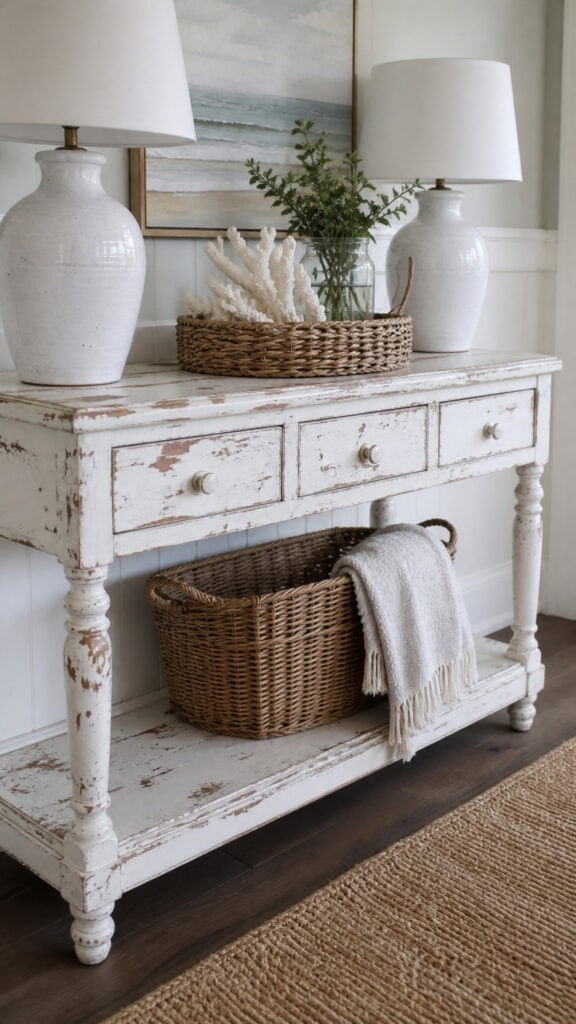
Choose sofas and seating with durable, soft fabrics in neutral tones that handle daily life while remaining stylish. Slipcovered sofas or pieces with removable, machine-washable covers are practical for households with frequent use. Mix in distressed painted cabinets or side tables and a solid, weathered wood coffee table for warmth and resilience. An upholstered ottoman in a sturdy weave can serve as extra seating, a footrest, or a tray-topped surface. Prioritize comfort and proportion so furniture supports both family time and entertaining.
4. Layered Natural Textiles to Soften Hard Lines
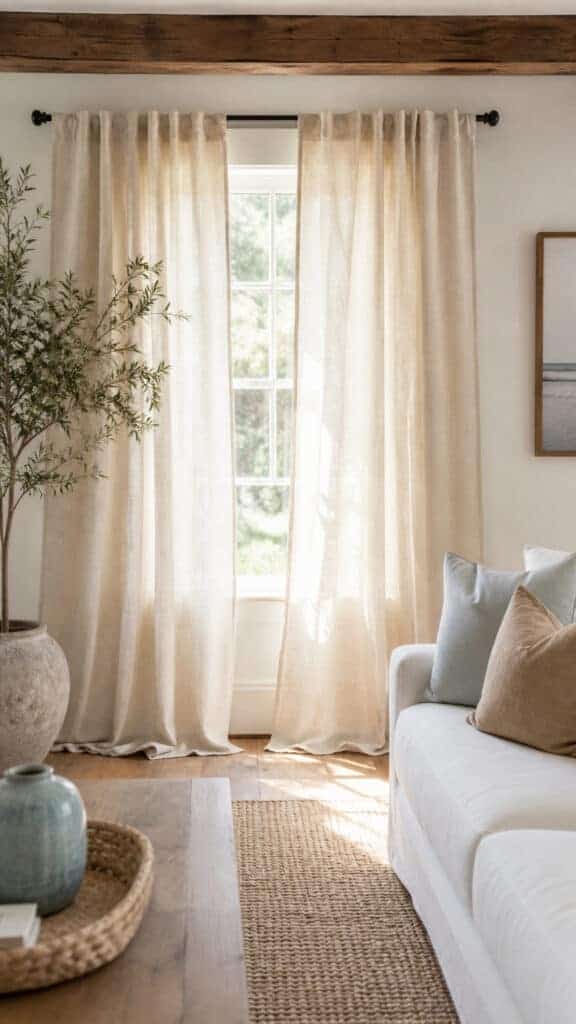
Natural rugs, woven throws, and linen window treatments anchor the coastal-farmhouse aesthetic while adding tactile comfort. Place a jute or sisal rug to define seating areas—layer a softer rug on top in play areas or near sofas for extra comfort. Chunky knit throws, cotton-linen blends, and linen curtains with a relaxed drape introduce warmth and movement. Hang window panels high and wide to maximize light; choose washable or easy-care textiles where possible for straightforward upkeep.
5. Storage That Looks Good and Works Hard
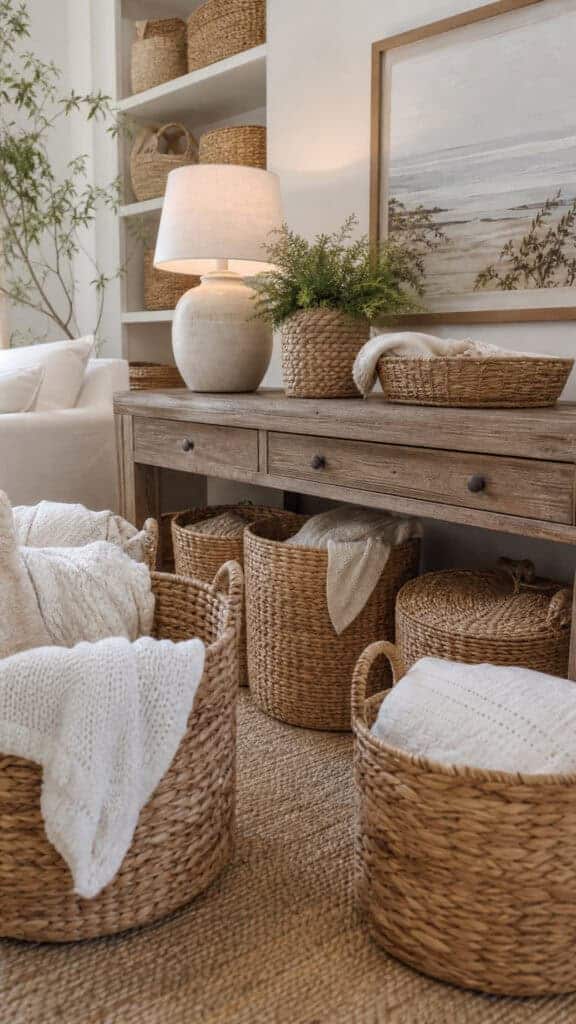
Incorporate woven baskets, closed cabinetry, and open shelving to keep everyday clutter contained while enhancing the room’s natural texture. Large seagrass or rattan baskets are ideal for blankets, toys, or extra pillows and can be grouped by size for visual balance. Floating reclaimed wood shelves offer display space for books, ceramics, and personal finds; alternate decorative items with functional pieces to avoid a staged appearance. A vintage ladder leaned against a wall makes a simple blanket display and adds vertical interest without taking up floor space.
6. Curated Accents: Collected, Not Themed

Select accessories that feel like they were gathered over time rather than purchased as a set. Mix vintage nautical pieces—an oar, brass lantern, or aged map—with botanical prints and small sculptural items to create personality without drifting into kitsch. Metal accents, such as galvanized trays or lanterns, introduce an industrial edge that pairs well with worn wood. Use scale and restraint: one oversized wall clock or a single statement mirror often reads better than many small competing pieces.
7. Styling Focal Points: Mantels, Media Walls, and Groupings
A focal wall, whether a fireplace mantel or media wall, should feel intentional and layered. Anchor a mantel with a broad, chunky wood shelf and rotate decor seasonally—simple vases, a framed print, or a piece of driftwood create calm groupings. For TV areas, frame the screen with a textured background and flanking shelves to integrate technology into the design. Keep displays asymmetrical and allow breathing room around each item so the space feels curated rather than cluttered.
Final Thoughts
A successful coastal farmhouse living room combines durable, comfortable furnishings with layered natural textures and a restrained color story. Focus on a few well-chosen foundational elements, add practical storage, and introduce personal accents over time to build a welcoming space that balances seaside lightness with farmhouse warmth.