How to Land Your First Paid Writing Jobs: A Practical Plan for New Freelancers

You don’t need a fancy website, a long résumé, or a byline to start earning for your words. Clients mostly want reliable drafts that hit the brief and arrive on time. This article lays out a step-by-step, market-focused approach: pick one deliverable, make a small set of realistic samples, find the right places to pitch, and turn one paid job into steady income. Each section translates a core idea into concrete actions and example language you can use this week.
1. Choose one package and ship it: the beginner’s advantage
Most beginners stall trying to be everything. Instead, define a single, shippable offer—one blog post, one email, or a batch of product descriptions—and practice it until you can deliver a clean draft on demand. Create three short samples in a plain Google Doc that mirror real assignments: a straightforward how-to blog post for a local service, a short welcome email for a subscription, and a trio of product descriptions for a retail niche. Put those links in a single page and use them to answer the only question a buyer cares about: can this person solve my immediate need?
2. What clients actually buy: formats that keep you booked

Clients pay for finished, usable pieces that save them time. The most common asks are evergreen content like blog posts and SEO pages, short email sequences that nurture subscribers, compact product descriptions, and single-page landing copy designed to convert. There’s also steady demand for editing, content refreshes, and social calendar posts. Think in terms of packaged outcomes—a delivered post, a welcome email series, a batch of product blurbs—rather than vague offers. Practically, that means naming the finished item in your pitch and showing a sample that proves you can produce it reliably and on the client’s cadence.
3. Where to look first and how to stand out there

Target places where buyers already post and match your narrow offer. Marketplaces and freelance platforms work if your profile describes one specific service; a headline like “Amazon product descriptions for kitchen tools” gets attention. Niche job boards that list content roles and startup marketplaces often have clients who understand scope and pay for results. Don’t overlook local businesses: a concise in-person pitch to a café owner or a dentist can turn into a recurring assignment. Example opener: “I noticed your site doesn’t answer customers’ common questions. I can write a monthly post that brings those searchers to you.” Tailor where you look to the kind of deliverable you sell.
4. A hiring shortcut: a one‑page portfolio and proposal templates
Create a single-page portfolio in Notion or Google Docs with three targeted samples and two-line explanations of who each piece was written for. When applying, mirror the client’s brief in your opening sentence, then point to the one sample that proves you can do that exact job. Ask the budget and whether they require a paid short trial; decline requests for a full unpaid article. Keep a follow-up cadence: one short reminder after several business days and then move on. This tidy, repeatable approach saves time and shows you can solve the client’s problem without drama.
5. Price by the finished thing and protect your floor
Charge per deliverable rather than selling time when you’re starting. Name the finished product in your quote—one blog post, a welcome email sequence, a batch of descriptions—and set a minimum you won’t go below. If a prospect pushes back, shrink the scope (fewer words, fewer revisions) instead of carving down your rate. Favor fixed-price packages while you learn to estimate work reliably; hourly billing comes later when speed is an advantage. After you complete a handful of paid jobs, raise your floor and test new rates with incoming prospects, adjusting if the market pushes back.
6. Turn one sale into steady work: the follow‑up playbook
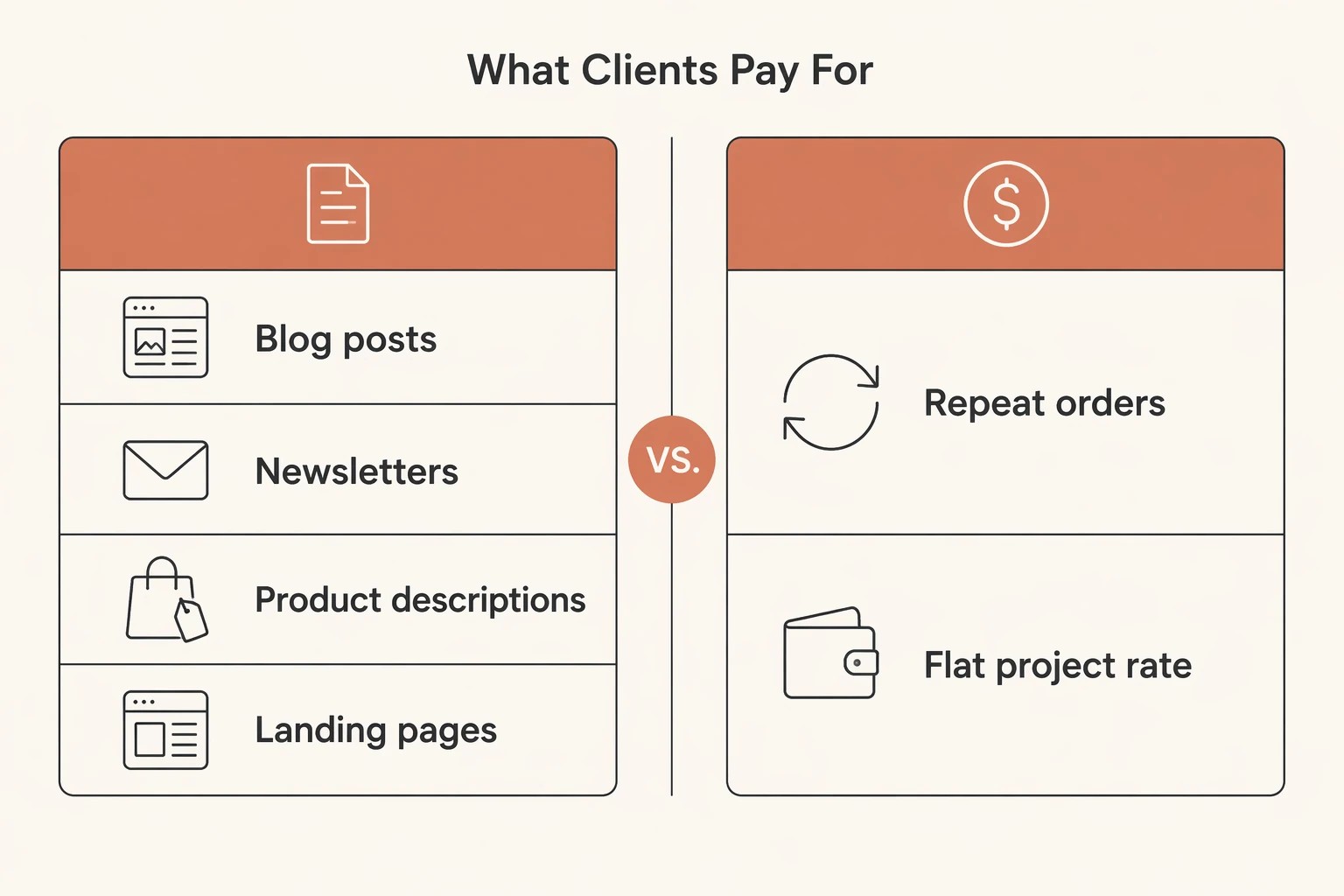
Repeat income comes from making it easy for clients to buy again. Two days before delivering a final draft, offer the next obvious item: “This lands Wednesday—would you like me to handle the product descriptions next, or shall I hold the slot?” Propose a simple retainer option: a small monthly block for regular posts or newsletters with unused hours rolling once. Track clients in a tiny spreadsheet with next-follow-up dates and a short note about their calendar. Monthly, send three targeted check‑ins that reference something concrete—an upcoming promotion or seasonal topic—so you stay front of mind.
7. Quick answers to common beginner questions
Do you need a website? No—three clear samples on a shared Google Doc or Notion page are enough to start. No clips yet? Write three realistic assignments that read like finished work for real businesses. Should you apply to experience-required listings? Only if the task matches what you can already deliver; skip specialized roles. How do you know a rate is too low? If the pay would make the job unpleasant after the first draft, it’s too low. Want a repeat client? Make the handoff smooth, ask for the next task before you finish, and offer one easy follow-up service.
8. A simple 30‑day roadmap to your first paid pieces
Focus the first month on execution rather than polishing. Pick one deliverable, write three short, specific samples, and publish them in a single, easy-to-scan place. Open accounts on two platforms that suit that offer—one broad marketplace and one curated job board—and send a handful of tailored pitches each week. When you land a paid task, deliver it on time, ask for the next assignment before you close it out, and add the client to your follow-up system. As soon as you have multiple paid pieces, increase your floor and repeat the cycle with better pricing and fewer cold pitches.
Start by doing one small thing well and showing it to the right person. The fastest path to paid work is a tight offer, three realistic samples, and a steady habit of short, targeted pitches. Ship the work, ask for what’s next, and let repeat orders replace the hunt.