How to Start Affiliate Marketing with No Budget: A Practical, Trust-First Roadmap

You don’t need startup capital to begin recommending products online, but you do need a plan that treats recommendations like relationships rather than instant sales. This guide walks through the exact sequence—choosing a buyer, building discoverable content, choosing partners, and turning attention into income—so you can start with only time and persistence.
1. What affiliate marketing really does (and doesn’t)
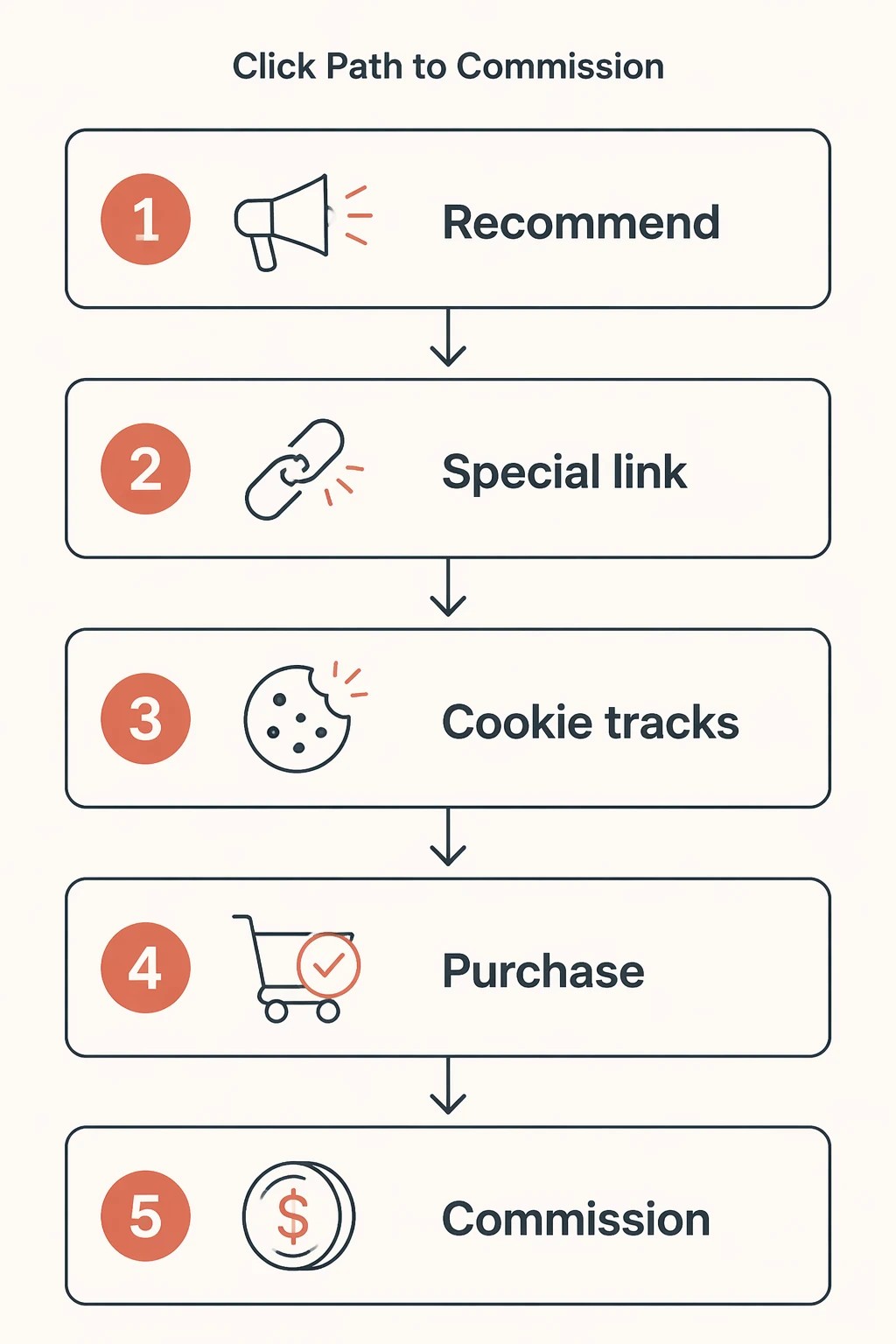
Think of affiliate marketing as introducing a friend to a product you already trust, and the merchant rewarding you when that introduction leads to a purchase. Online systems add a technical layer—a tracked link and a time window—so sales can be tied back to the person who recommended the item. You don’t build or ship anything; your value is shortening the distance between someone curious and a confident purchase. That means the work lives in clear communication and steady distribution. Begin by imagining a single helpful recommendation and where you would place it—on a blog post, a short video, or a pinned image—and treat that placement as your first project.
2. Start with a specific buyer, not a broad topic

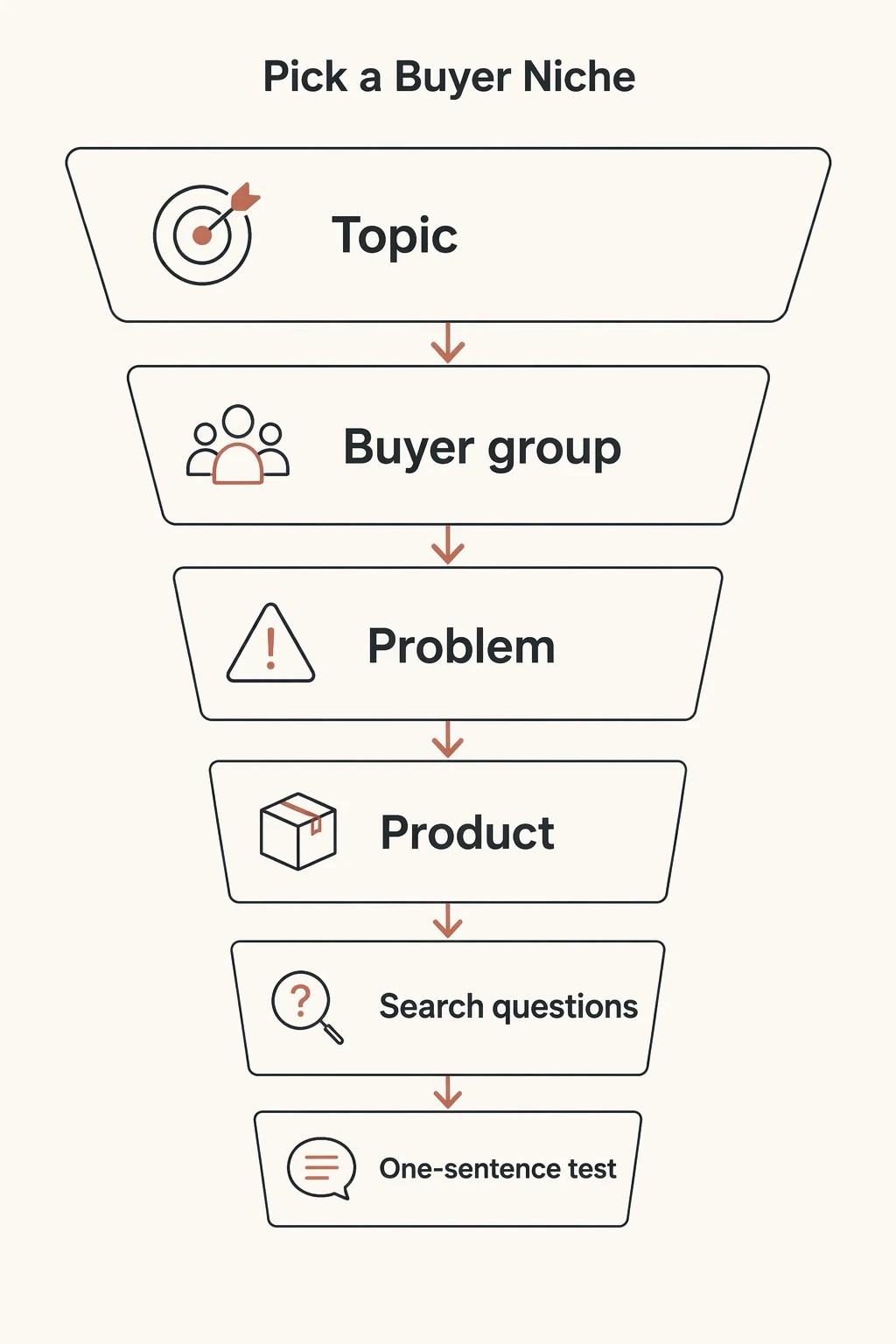
Your aim is to be the obvious answer for a person facing a single, urgent problem. Broad subjects attract casual browsers; narrowly defined buyer groups are ready to spend. Try this test: write one sentence that names the person and the purchase they’re likely to make tonight—e.g., “I help city parents find a stroller that folds into a compact car trunk.” If you can’t visualize the exact product that sentence would recommend, narrow further. Use search autocomplete or platform search boxes to find recurring questions people ask about that precise problem. That clarity keeps your content focused and dramatically improves the chances a reader will click through.
3. Pick one free discovery channel and commit
With no ad budget, choose one platform that exposes new people to content organically—Pinterest, TikTok, or short-form video on other sites are good examples—and post consistently for a set period. For ninety days, ignore shiny new tools and refine your output on that single channel. Schedule a modest loop—two posts per week—to learn what resonates without burning out. Use the platform’s search autocomplete to surface real questions, then craft posts that answer those queries. Track saves or shares more than vanity likes; those engagement types signal the algorithm that your content solves a problem and should be shown to more strangers over time.
4. Write the posts buyers actually need
Focus your writing on the decisions readers are already making. Lead with the single, annoying question a buyer would type into search, then answer it quickly. Three formats perform especially well: direct comparisons that help someone choose between two options, posts that call out common buying mistakes, and “best-for” guides that match a product to a clearly defined need. Stretch one product idea into multiple helpful pieces—comparison, how-to, common mistakes, and a short FAQ block—to capture different search queries and stages of consideration. For example, a review of an entry espresso machine can be followed by an article comparing grinders, a troubleshooting guide, and a short FAQ that answers the top long-tail questions buyers type.
5. Choose affiliate partners with practical terms
Before you add a single link, read the program’s fine print. Check the minimum payout threshold and how they pay—PayPal, bank transfer, or store credit matter. Note cookie duration: a longer tracking window often rewards content that people bookmark and return to. Watch for reversal policies that claw back commissions on returns and any prohibited promotion methods that could get your account closed. A network can be a simple way to try multiple offers quickly, while direct brand programs sometimes pay better and provide personal support. Prefer programs with clear contact points; when payments or questions arise you want a reachable human on the other end.
6. Place links, disclose simply, and measure everything
Put the affiliate link where the reader is ready to act—immediately after the sentence that makes the recommendation—rather than buried at the end. Add a short, plain disclosure next to the link so readers can scan and still know you may earn a commission. Track what gets clicks: use your program’s dashboard plus basic UTM tags or a simple spreadsheet that logs post name, link position, and clicks. Review this data weekly or monthly to spot patterns. If a link never gets clicked, adjust the copy or move its placement; if it gets clicks but no sales, test another program or clarify the promise you made before the click.
7. Scale without spending by amplifying what works
When one post starts delivering clicks, expand into the topics it implies rather than chasing unrelated trends. Build a tight cluster of related posts—five well-linked pieces beats a dozen scattered pages. Only add a second traffic channel after the first produces a consistent trickle of clicks; splitting attention too soon causes burnout and weak results. Regularly audit older content: update broken links, replace unavailable products, and refresh advice. A quarterly check of your top-performing posts yields quick wins and preserves existing value. This steady, focused growth conserves time and leverages existing trust instead of buying reach.
8. Answers to the questions most beginners ask
New affiliates often ask whether they need a website, how broad their niche can be, and how quickly they’ll earn. You don’t need a website to start—many creators test ideas on a single social profile or a free blog. If you can’t describe your buyer and their purchase in one sentence, your niche is likely too broad. Expect timelines to vary; early efforts are about learning what your audience clicks, not cashing out immediately. Begin with one focused recommendation, master it, then add related products based on what actually performs with your readers.
9. A steady attitude beats a quick flip
Affiliate earnings usually trail content production, and that lag is a feature, not a bug. The durable strategy is to keep making useful stuff even when commissions stay low. Before you publish, ask whether the piece would genuinely help a stranger decide between two options; if it wouldn’t, rewrite it. Persistence and helpfulness build a reputation on search and social platforms that eventually turns into consistent clicks and occasional sales. Treat early months as skill-building: clarity in advice, thoughtful link placement, and simple tracking habits compound into reliable revenue over time.
Start small, pick a single problem to solve, and be useful over the long haul. With clear focus, patient publishing, and simple measurement, you can begin affiliate marketing without money—only the willingness to help strangers make better buying decisions.