Side Hustles for Single Moms: Fast Cash, Flexible Hours, and Smart Growth

When time is tight and schedules are unpredictable, extra income needs to be fast, flexible, and realistic. This guide lays out practical side-hustle options that fit school runs, nap windows, and evening peace. Each section gives clear examples you can try this week and a sensible way to scale what works.
1. Start With Reliable Sitting and Pet Care
Offering sitting—either for children or pets—can be one of the fastest ways to earn without complicated setup. Focus on what you can reliably provide: a calm home environment, trusted pickup and drop-off, or a regular dog-walking route. List availability on neighborhood groups and emphasize your routine (pickup times, quiet hours, breaks). For example, advertise evening check-ins for parents who need an out‑of‑house date night or a regular after-school pickup for families on the same route. Set a clear flat fee and simple expectations so both families and you know the boundaries. Repeat bookings build quickly if you’re dependable and communicative.
2. Pick Gigs That Put Cash In Hand Quickly
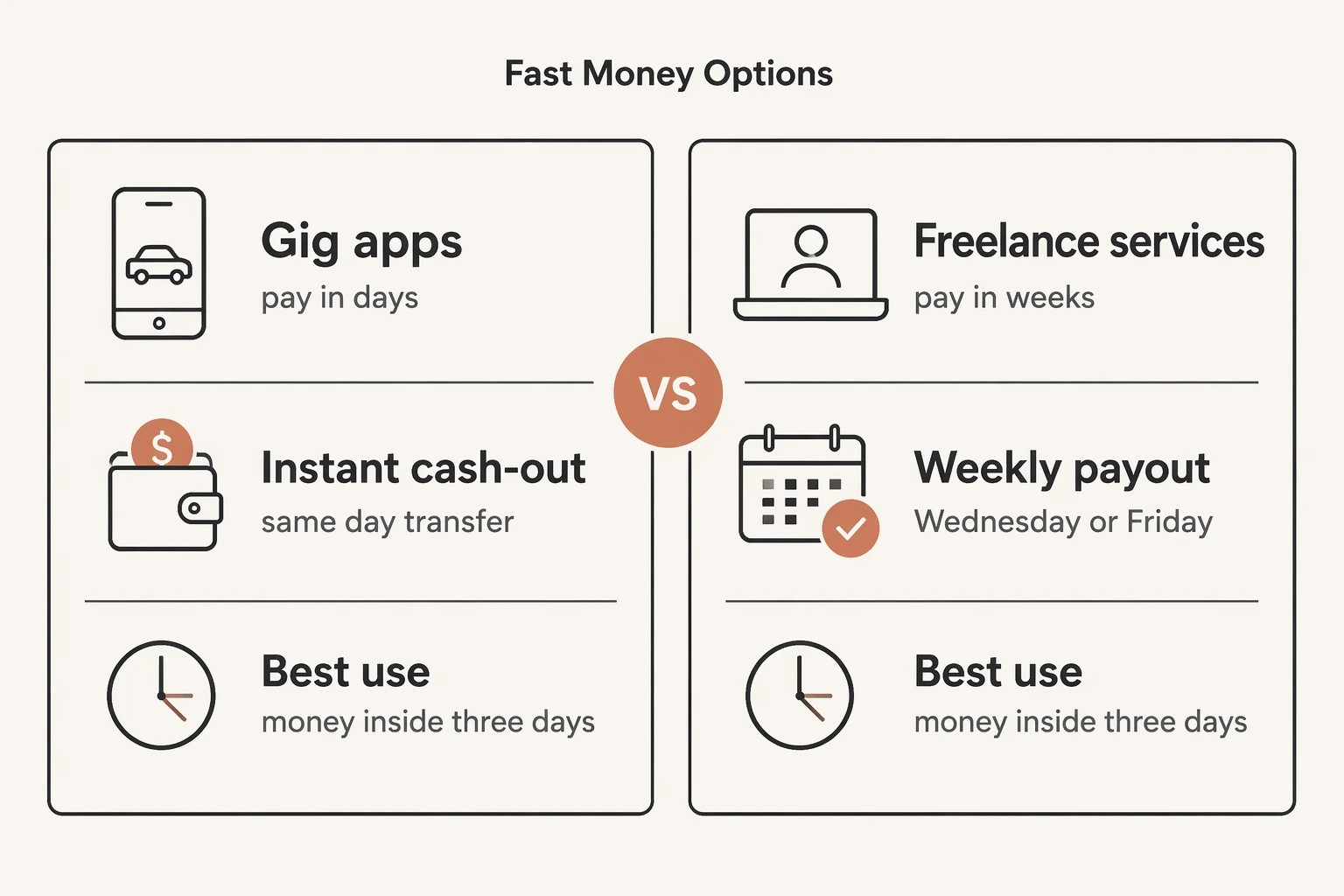
When a tight week needs cash now, choose tasks that pay on a short schedule or let you cash out instantly. Delivery and task apps, short local jobs, and simple one-off services tend to move money faster than longer freelance projects. Get through the sign-up steps and try one short shift during a school window to learn the real rhythm—how long onboarding takes, what the typical earnings look like, and whether the route drains your time. Treat these gigs like tools you use when speed matters, not as long-term careers. That clarity helps you decide when to take a rush job and when to save energy for steadier work.
3. Turn Unused Gear Into Quick Cash

Closets hold ready-made income: outgrown strollers, clothes, toys, and small appliances can sell locally fast. Use your phone to take clear photos against a plain wall, write honest condition notes, and price items to move rather than to maximize profit. A short, well-shot listing posted tonight can attract a buyer by morning. Offer pickup or porch drop-off to remove coordination friction, and bundle similar items to make transactions simpler. As you sell, note what types of items your neighborhood buys—for example, seasonal outerwear or baby gear—and use that insight if you later source items for resale instead of starting from scratch.
4. Work From Home in Rhythm With School Hours
Map your day into actual usable blocks—brief pockets during drop-off, a fragile nap hour, and steadier evening stretches—and pick tasks that fit those shapes. Short, pause-friendly tasks like transcription, quick edits, or inbox triage work well in fragmented windows; longer, focus-heavy work like drafting articles or client calls belongs in more reliable quiet time. Organize your to-do list so that half-finished items can be stopped without losing momentum: label files clearly, keep short notes, and use timers. That way, when interruptions happen, you close your laptop feeling you accomplished something rather than weighed down by an unfinished task.
5. Stack Two Small Remote Streams for Resilience
Relying on one big client that requires long availability is risky when parenting needs can change at a moment’s notice. Instead, combine a steady, lower-demand gig—such as formatting a weekly newsletter or moderating a forum—with a project-based line like seasonal resume updates or occasional proofreading. Another option is short, scheduled chat-support shifts that give a predictable window you can plan around. The steady stream covers basics; project work brings bursts of extra pay. If one income line pauses because of a sick day, the other helps keep the month steady, and you keep the flexibility you need.
6. Use Local Errands and Pickup Work That Matches Your Routes

Local errands and pickup services turn neighborhood knowledge into income. Offer scheduled runs—groceries, pharmacy pickups, dry cleaning collection—or advertise a dependable pickup-and-drop weekday service on community boards. Keep your runs within routes you already travel to avoid wasting fuel or extra time. Post a short offer on neighborhood platforms describing a fixed fee per stop and your usual availability so neighbors can plan around your schedule. Test one day a week at first; if demand is steady, consider making it a repeating slot. Local repeat customers reduce onboarding time and paper-trail friction compared with unfamiliar one-off requests.
7. Build Something That Earns While You Sleep
Slow-burn income—digital templates, printables, patterns, or short guides—requires upfront time but can sell repeatedly once listed. Start from skills you already use: if you regularly format school flyers, turn that into a printable template; if you’ve organized volunteers, create a simple checklist planners can buy. Choose one platform where your buyers live—an online marketplace, a neighborhood group, or a focused professional site—and put your first product there. Keep expectations realistic: these assets won’t replace fast cash immediately, but over time they create a passive layer that fills small gaps between gigs.
8. Pick the Hustle That Actually Fits Your Calendar
Before you chase earning potential, check the minutes you truly have and choose a hustle that fits them. Use a simple decision grid: how quickly does it pay versus how much uninterrupted focus it needs? If you have many short pockets, choose tasks that can be paused; if you have one reliable block, choose work that rewards sustained attention. Also weigh startup cost: if a hustle needs equipment or training you can’t afford, don’t treat it as a low-risk option. Pick one thing that aligns with today’s rhythm and test it for a few weeks before adding more complexity.
9. Turn a Trial into a System in Three Months
Treat the first ninety days as a focused experiment: set up profiles and samples in the first week, get an initial paying client in the next few weeks, and repeat the actions that actually brought money. Create three honest samples that show what you can deliver right now, then tell five people directly about your new service—personal messages work better than general posts. Track which outreach or listing produced the sale and do it again. By prioritizing repetition over adding new offerings, you convert a sporadic effort into a dependable habit that survives interruptions.
10. Protect Your Earnings: Watch Fees, Miles, and Paperwork
Real costs often hide behind promising gigs. Avoid opportunities that require upfront payment for access or starter kits; genuine platforms earn from completed work, not from applicants. For vehicle-based work, estimate fuel and wear so you don’t end up spending more than you earn. Keep a separate account or tracking spreadsheet for side-hustle deposits and set aside a portion regularly to cover taxes and unexpected bills. Save receipts and notes about mileage, supplies, and platform fees from day one so you can judge whether a gig truly pays after all expenses are counted.
Start with one practical move you can complete this week—list an unused item, sign up for a short local shift, or offer a simple sitter service—and build the rest around what your real schedule allows. Small, repeatable wins add up into steady, flexible income.