The Wreath Styling Guide: 11 Fresh Ways to Welcome Christmas at Home
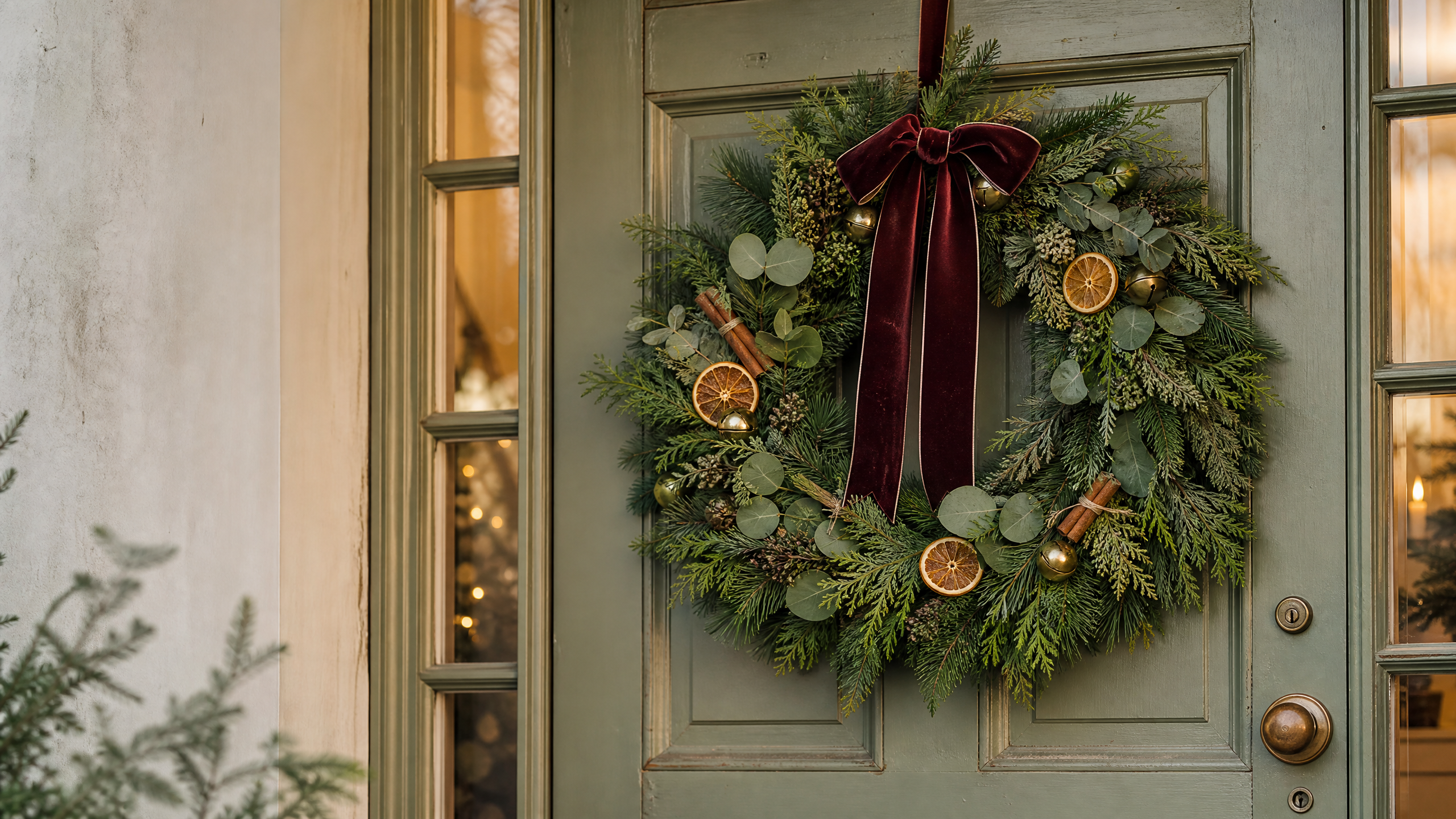
A wreath can do much more than fill an empty spot on the front door. It can introduce the colors of a room, make a small entryway feel intentional, or bring a little seasonal texture to a kitchen, bedroom, or covered porch. The best designs are not necessarily the biggest or most elaborate. They are the ones that suit the space, withstand the location, and reflect the way you actually decorate.
This year, think of a Christmas wreath as a small decorating plan rather than a single holiday purchase. Start with the mood you want—woodland, polished, nostalgic, softly colorful, or delightfully playful—then choose foliage, accents, and lighting that support it. The ideas below are organized by decorating personality, so you can find a direction without trying to reproduce the same look as every other house on the block.
Before You Choose: Match the Wreath to Its Setting
The location should guide the construction. A wreath placed between an exterior door and a storm door needs to fit comfortably without rubbing. One above a mantel can be fuller and more delicate, while a design on an uncovered door should be made from materials suited to changing weather. If you are working with a live wreath, check its condition regularly and keep it away from heat sources. For a faux wreath, look for a sturdy frame and secure attachments rather than choosing by appearance alone.
It also helps to measure the space before shopping or crafting. A wreath that seems modest in a large entry can disappear, while an oversized arrangement may overwhelm a narrow door. Leave enough room around the design for the door hardware, house numbers, or a seasonal bow to remain visible.
| Decorating question | A useful starting point |
|---|---|
| Where will it hang? | Door, mantel, mirror, cabinet, porch, or interior wall |
| What is already in the room? | Note the dominant wood, metal, paint, and textile colors |
| How much maintenance is realistic? | Choose faux, dried, or live materials accordingly |
| Does the space need light? | Consider a battery-powered strand or nearby lanterns |
1. Build a Woodland Wreath with Uneven Texture
For a relaxed, natural look, begin with a wreath made from several shades of green instead of one uniform type of foliage. Layer feathery branches, broader leaves, and a few visible twigs so the outline feels gathered rather than perfectly manufactured. Add a handful of pinecones or small berry clusters, keeping most of the base exposed.
The key is restraint. Rather than covering every inch, place accents in two or three loose groupings around the circle. A strip of brown velvet, a homespun ribbon, or a simple linen tie can finish the design without making it feel fussy. This approach looks especially at home against painted wood, brick, or a quiet neutral wall.
A simple assembly plan
- Secure the largest foliage around the frame, alternating the direction of the stems.
- Tuck in shorter sprigs to soften gaps while leaving some of the frame’s natural shape visible.
- Attach pinecones or berries in small clusters, varying their height and angle.
- Finish with one broad ribbon tail rather than a large, symmetrical bow.
2. Try a Winter-White Arrangement Without Making It Flat
An all-white wreath can be elegant, but a single pale material may look washed out. Create dimension by combining matte and reflective surfaces: frosted leaves, ivory ribbon, pale berries, whitewashed twigs, and a few silver-toned ornaments. The contrast between soft and shiny elements gives the arrangement interest even when the palette is restrained.
Hang this style where the background provides contrast. A deep green door, charcoal wall, or dark wood mantel allows the pale details to stand out. If the room is already light, use natural branches or a darker ribbon underneath so the wreath does not blend into its surroundings.
A useful finishing touch is a small group of warm lights placed behind the foliage. The glow will catch the reflective accents while keeping the overall effect welcoming rather than icy.
3. Use Burgundy as the Main Character
Red does not have to mean bright scarlet. Deep burgundy, wine, and muted cranberry shades create a richer, quieter version of traditional holiday decorating. Pair a dark berry-toned ribbon with evergreen, dried flowers, or a few aged-gold details. The result feels warm and grown-up without losing its Christmas spirit.
This color story works particularly well in dining rooms and living rooms where wood furniture, leather, or brass details are already present. To keep the wreath from feeling heavy, repeat the burgundy only once or twice elsewhere in the room—for example, in napkins, a pillow, or a candleholder. Repetition creates cohesion without requiring a complete seasonal makeover.
4. Make a Metallic Wreath Feel Collected, Not Flashy
Gold and champagne accents can bring light to a dim hallway, but too many glittering pieces may compete with the rest of the décor. Start with a green or twig base, then add just a few metallic leaves, small ornaments, or brushed-gold bells. Matte finishes are especially helpful because they add warmth without reflecting every nearby light.
For a modern look, arrange the metallic pieces on one side of the wreath and let the foliage taper toward the opposite side. An asymmetrical design feels fresh and gives the eye a place to rest. For a more traditional treatment, distribute the accents around the circle but vary their sizes so the arrangement does not look like a repeated pattern.
5. Give Dried Flowers a Seasonal Role
Dried flowers are an easy way to move beyond the expected combination of evergreen and red berries. Choose flowers in muted rose, rust, cream, or plum, then place them among green branches or bare twigs. Their papery texture adds softness, while their subdued color keeps the wreath suitable for a home with a neutral decorating scheme.
Because dried elements can be fragile, reserve this style for an interior door, wall, or covered entry. Handle the wreath by its frame, and avoid placing it directly beside a fireplace, radiator, or other strong heat source. A narrow ribbon in velvet or cotton can connect the floral colors to the room without hiding the blooms.
6. Add Bells for Sound as Well as Sight
A wreath with a few bells has a playful quality that photographs cannot capture. Choose bells in a finish that suits your hardware—aged brass for a traditional home, silver for a cool palette, or painted metal for a more casual setting. Hang them low enough to move gently when the door opens, but secure them so they do not bang against the surface.
This idea is particularly effective on a front door or mudroom entry, where the small sound becomes part of arriving home. Keep the rest of the design uncomplicated: foliage, a ribbon, and three or five bells are usually enough. A crowded arrangement can make the sound feel accidental rather than intentional.
7. Frame a Mirror or Window Indoors
A wreath does not need to be reserved for the entrance. A lightweight design hung over a mirror can become the focal point of a dining room, bedroom, or hallway. A window is another natural location, especially if the wreath can be seen from both inside and outside.
When decorating glass, use a hanging method that will not damage the surface or leave visible residue. Keep the wreath slightly smaller than the mirror or window so the frame remains part of the composition. This placement is ideal for a delicate eucalyptus-style arrangement, a small cluster of berries, or a minimalist ring of greenery.
8. Create a Mini Wreath Collection
One large wreath is not the only way to make an impact. A group of small wreaths can decorate the backs of dining chairs, a row of pantry doors, or several windows along a hallway. Keep the size and base material consistent, then personalize each one with a different ribbon or small accent.
For example, use greenery on every wreath but vary the finishing detail: one with plaid, one with velvet, one with bells, and one with a simple wooden ornament. The repeated shape provides order, while the slight differences make the display feel handmade. This approach works well in homes where a single oversized decoration would be impractical.
9. Turn a Plain Wreath into a Family Tradition
A simple wreath can become more meaningful when its accents change from year to year. Start with a dependable evergreen or twig base and add one new element each season: a hand-painted ornament, a length of inherited ribbon, a small wooden star, or a tag bearing the year.
Store the removable pieces separately in a labeled box. Next holiday season, you can rebuild the arrangement in minutes and decide whether the new addition should be prominent or tucked into the foliage. Over time, the wreath becomes a visual record of celebrations rather than a decoration that feels disposable.
10. Bring the Kitchen into the Holiday Story
A small wreath on a pantry door, range hood, or open shelving can make the kitchen feel included in the seasonal decorating. Choose a design with a slim profile so it does not interfere with handles or cooking equipment. Bay-like greenery, dried citrus slices, cinnamon-colored ribbon, or wooden accents can suggest the warmth of the kitchen without relying on an oversized display.
Keep decorative materials away from heat, steam, and open flames. In a busy kitchen, faux or well-secured dried elements may be easier to manage than a fresh arrangement. The goal is a cheerful detail that stays out of the way while meals are being prepared.
11. Use Lights as a Finishing Layer
Lighting can change the mood of an otherwise simple wreath. Warm white lights create a gentle glow, while cool-toned bulbs make silver and white accents appear crisper. Choose a strand that is appropriate for the wreath’s location, conceal the battery pack or cord as neatly as possible, and test the lights before attaching the foliage.
Do not let the lights become the entire design. Weave them through the wreath so a few bulbs sit near the surface and others glow from within. This layering makes the arrangement look dimensional during the day and softly illuminated after dark.
How to Keep the Finished Wreath Looking Intentional
Once the wreath is hung, step back several feet and view it from the approach guests will take. Adjust any ribbon tails that hide the shape, rotate accents that point awkwardly, and check whether the design is centered at eye level. On a door, make sure the wreath does not block a peephole, house number, or handle.
If the arrangement looks too busy, remove one category of accent rather than adding another. If it feels unfinished, repeat one color or texture nearby—a berry tone in a doormat, a metallic finish in a lantern, or a ribbon color in a porch planter. Small echoes make the whole display feel considered.
Let the Wreath Set the Tone
The most successful Christmas wreaths are not defined by a particular trend. They work because their materials fit the home, their scale fits the setting, and their details express the atmosphere the household wants to create. A few branches and berries can feel rustic; pale foliage and brushed metal can feel refined; dried flowers and velvet can feel romantic; tiny wreaths and bells can feel playful.
Choose one clear direction, build it in layers, and leave enough breathing room for the design to be appreciated. Whether your wreath welcomes visitors outdoors or quietly brightens an interior corner, it can become the small seasonal gesture that makes the whole home feel ready for Christmas.