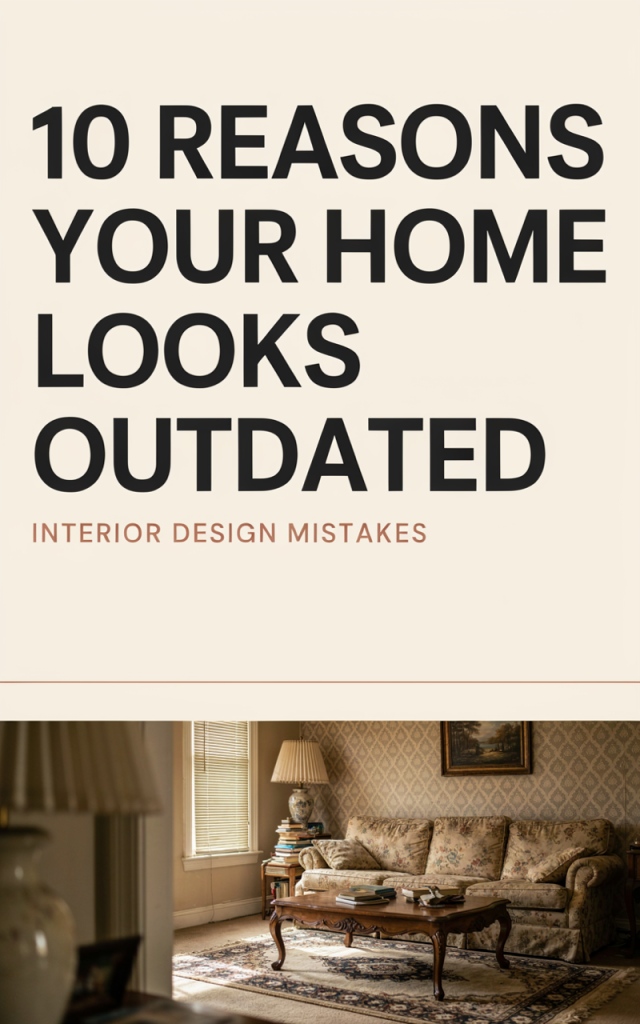
10 Reasons Your Home Looks Outdated: Interior Design Mistakes
A home can feel dated without having a single obviously old-fashioned piece of furniture. Sometimes the issue is a collection of small choices that once made sense but no longer work together: a crowded shelf, a tired light fixture, or a room arranged around yesterday’s habits. The goal is not to chase trends or erase your home’s personality, but to notice what feels unintentional.
Refreshing a room is often less about buying more and more about editing what is already there. You can improve proportion, light, color, and function while keeping the objects and memories that make the home yours.
1. Furniture That Overwhelms the Room
Large furniture can make a space feel less current when it blocks walkways, crowds windows, or leaves no visual breathing room. A sectional may dominate the room, while multiple occasional chairs can interrupt the path through the space. The issue is often poor scale rather than the furniture’s age.
Measure before replacing anything. Keep clear routes between doors, seating, and tables. If a full-size piece is still useful, float it away from the wall or remove one smaller item nearby.
2. A Room Lit by One Harsh Fixture
A single ceiling light rarely provides flattering or functional illumination throughout a room. It can leave corners dim while casting strong light directly downward, making finishes and furnishings appear flat.
Build light in layers. Combine a ceiling fixture with floor or table lamps, then add focused light where you read, cook, work, or get dressed. Choose bulbs with a consistent color temperature from room to room, and use dimmers where possible. Warmer, flexible lighting can make the space feel more considered.
3. Too Many Matching Furniture Sets
A complete matching bedroom or living-room set can make a home feel unintentional because every surface has the same finish, profile, and visual weight. Coordination is useful, but perfect repetition leaves little contrast or evidence that the room evolved over time.
Keep useful pieces and introduce variation gradually. Pair a matching bed with different nightstands, or mix upholstery with natural materials. Repeat one or two colors for connection, then add character through texture and shape.
4. Heavy Window Treatments That Hide Natural Light
Thick curtains, ornate valances, or overly dark blinds can weigh down a room and make windows appear smaller. When most daylight is concealed, walls and furnishings may seem dull even if their colors are perfectly suitable.
Let the architecture guide the update. Hang curtain rods slightly wider and higher than the window when appropriate, and choose panels that reach the floor. Use light-filtering shades for privacy while preserving daylight. In rooms that need darkness, combine a simple blackout layer with a softer decorative panel.
5. Cluttered Surfaces and Overfilled Shelves
A home can look older when every tabletop, mantel, and open shelf is occupied. The problem is not having collections or useful items; it is that the eye has no place to rest. Without spacing, small objects obscure furniture lines and make cleaning harder.
Edit in stages rather than removing everything. Clear one surface completely, then return only the items that are useful, meaningful, or visually strong. Vary the height of a few objects and leave open space around them. Group related pieces on a tray, and store everyday extras in closed containers.
6. Colors That Compete Instead of Relating
Color can make a home feel dated when each room follows an unrelated scheme or when several strong accents compete in one space. A room needs a clear relationship among its wall color, furniture, textiles, and accessories.
Identify the colors you want to keep, then choose a restrained supporting palette for larger elements and repeat one accent in two or three places. If repainting is not practical, use a rug, artwork, or slipcover to bridge disconnected colors. A shared thread between adjoining rooms improves cohesion.
7. Accessories That Reflect an Earlier Chapter
Decor often remains in place long after a household’s needs and tastes have changed. A decorative sign from a previous phase, worn artificial greenery, or an assortment of small accents can make a room feel stuck even when the main furniture is comfortable. Sentimental objects deserve respect, but they do not all need to be displayed together.
Create a rotation for meaningful pieces. Keep a small group on view and store the rest safely, changing the display seasonally or when you want a fresh perspective. Replace tired accessories with durable elements such as a substantial bowl, framed photograph, or healthy plant.
8. Artwork Hung at Inconsistent Heights
Artwork that is scattered too high, too low, or too far apart can make a room feel unfinished. Even beautiful pieces lose impact when they do not relate to nearby furniture or to one another. The issue is unclear placement, not empty walls.
Treat artwork as part of the furniture arrangement. Center a piece over a sofa, console, or bed, and consider the entire grouping rather than the top edge of one frame. For a gallery wall, lay out the arrangement on the floor first. Relocating existing art may solve the problem.
9. Floors That Are Visually Disconnected
Bare floors, undersized rugs, and too many competing patterns can make rooms feel pieced together. A rug that only fits beneath a coffee table may appear like an afterthought, while different flooring transitions without a connecting color can interrupt the flow between spaces.
Use rugs to define zones and connect furnishings. In a seating area, aim for at least the front legs of major pieces to sit on the rug when the room allows. Choose a pattern or solid color that echoes an existing tone. If replacing flooring is not possible, consistent runners and carefully selected area rugs can create continuity.
10. Technology and Everyday Items Left in Plain Sight
Cords, remote controls, chargers, paperwork, and household equipment quickly add visual noise. Because these items are practical, they are easy to overlook, but a room can feel less polished when its surfaces are organized around technology rather than people.
Give daily-use items a designated home close to where they are needed. Use a cable sleeve, lidded box, or drawer organizer, with easy access for daily use. Balance televisions and speakers with artwork or storage instead of making them the only focal point. Plan storage around real routines so convenience and appearance support each other.
A More Intentional Home, One Edit at a Time
A home does not need to look brand-new to feel welcoming, current, and well designed. Begin with the change that improves daily life most: a clearer walkway, better light, a calmer surface, or a more useful storage spot. Then live with that adjustment before making another. This helps distinguish genuine needs from pressure to redecorate all at once.
The most successful updates usually preserve what is personal while refining what is distracting. When scale, light, color, and placement work together, even well-loved furnishings can look purposeful. Your home’s character is not a problem to solve; it is the foundation for making each room feel more like itself.