Tiny Kitchens Are Winning Right Now — Here’s Why Big Kitchens Feel Wasteful
We’re seeing a decisive shift in how people design and use kitchens. Once the unquestioned heart of the home, the oversized kitchen with an island the size of a conference table is losing ground to compact, highly efficient spaces. Tiny kitchens are winning right now because they meet changing economic realities, prioritize sustainability, and deliver deliberate, pleasurable cooking experiences without excess. In this piece we’ll unpack why the tiny-kitchen movement has momentum in 2026, how smart design makes small spaces perform like champions, and when a larger kitchen still makes sense. Expect practical explanations, examples we can apply to our own homes, and a realistic view of how to avoid waste, whether our next renovation is a downsized dream or a right-sized expansion.
Why Tiny Kitchens Are Having A Moment In 2026
There are a few converging forces that explain why tiny kitchens are having a moment in 2026. First, housing trends: more people are living in denser urban cores, choosing smaller homes for proximity to work, transit, and culture. Micro-apartments and accessory dwelling units (ADUs) have normalized compact living, and the kitchen had to adapt. Second, cost pressures: construction and renovation prices have remained elevated in many markets, so families and renters are prioritizing value over square footage. Third, lifestyle shifts: we cook differently now. Meal delivery, ghost kitchens, and day-to-day reliance on prepared foods mean we rarely need the extravagant prep areas and dual ovens that symbolized domestic abundance a generation ago.
Beyond economics and lifestyle, there’s an aesthetic and behavioral component. Minimalism and mindful consumption continue to influence interior design. Tiny kitchens force choices, what tools, appliances, and rituals matter to us? That constraint often leads to thoughtful investments in quality rather than an accumulation of seldom-used gadgets. And psychologically, a compact kitchen can feel cozier and more social: instead of a sprawling, impersonal space we’re invited to interact more closely while cooking or entertaining.
Finally, technology has reshaped expectations. Induction cooktops, compact dishwashers, small-format convection ovens, and app-enabled appliances enable high performance in a small footprint. When technology reduces the need for bulky infrastructure, it’s natural to reclaim that space for living areas or storage that serves multiple functions. Put together, these trends explain why tiny kitchens feel modern, efficient, and aligned with how we live now.
The Economics Of Small Kitchens: Cost, Space And Sustainability
The economics of small kitchens are compelling on paper and in practice. We save on upfront construction costs, ongoing utility bills, and the opportunity cost of floor area. But the financial case isn’t just about a cheaper renovation: it’s a question of how we allocate capital and what we consider waste.
Smaller kitchens reduce materials, labor hours, and finishes, think fewer linear feet of cabinetry, reduced countertop square footage, and less flooring area. Those savings compound when we opt for efficient systems: a single high-quality range instead of dual ovens, a compact dishwasher instead of a full-size model, and LED task lighting rather than an elaborate fixture scheme. Over a household lifecycle, lower utility usage from smaller, more efficient appliances translates into measurable cost savings.
There’s also an opportunity-cost argument: that same square footage reclaimed from a giant kitchen can become a flexible dining nook, a home office, or added storage, spaces that often provide more daily value than unused counter space. In urban markets especially, every square foot has a dollar value: when we compress the kitchen footprint intelligently, we unlock space that raises the overall livability and resale appeal of the home.
We should also factor in maintenance costs. Bigger kitchens mean more surfaces to clean, more appliances to service, and a larger inventory of rarely used tools and gadgets that eventually break down. Those hidden recurring expenses contribute to the sense that big kitchens can be wasteful.
Environmental economics matter too. A smaller kitchen typically requires fewer raw materials and generates less waste during construction. It invites us to choose longer-lasting items rather than disposables or cheap replacements. In short, the economic case for tiny kitchens is a blend of upfront savings, lower operating costs, smarter use of valuable square footage, and reduced maintenance burden, together they make small kitchens not just cheaper, but more efficient and less wasteful.
Design Principles That Make Small Kitchens Work
Good design is the difference between a cramped, frustrating kitchen and a compact one that performs like a pro setup. When we plan small kitchens, we focus on workflow, storage optimization, and multi-functionality. The design principles below are practical and replicable whether we’re remodeling a galley kitchen, outfitting an ADU, or fitting a kitchen into a living room alcove.
Three core ideas guide us: prioritize tasks, create efficient circulation, and make every surface pull double duty. Prioritizing tasks means understanding how we actually cook, do we bake frequently, or mostly heat and assemble meals? The answer dictates appliance selection and counter allocation. Efficient circulation is about minimizing steps between sink, stove, and fridge, the classic work triangle idea reinvented for tight plans. Finally, multi-use surfaces (drop-leaf counters, extendable tables, and integrated cutting boards) ensure flexibility without clutter.
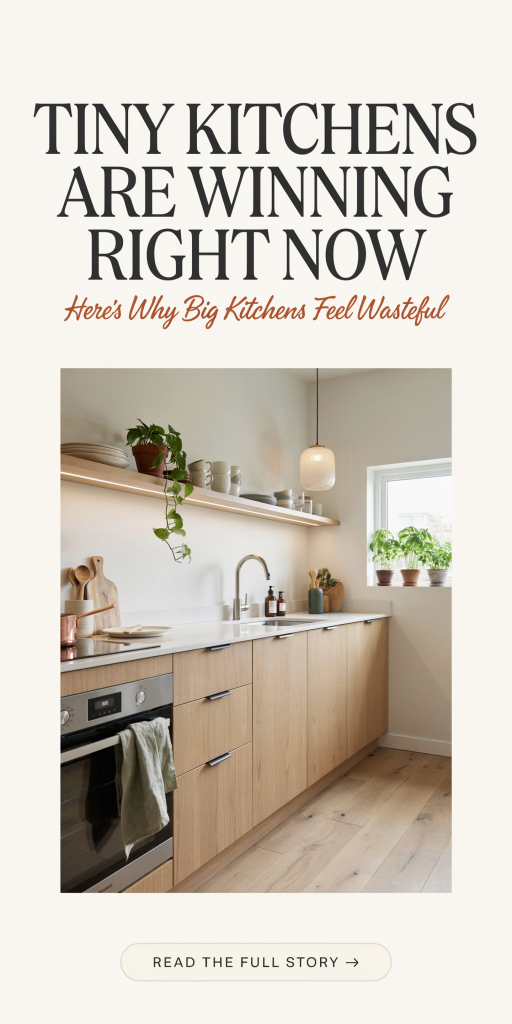
We also embrace visual strategies. A restrained material palette, consistent hardware, and flush cabinet fronts reduce visual noise and make the space read larger. Vertical thinking, using full-height cabinets and open shelving high on the wall, keeps often-used items reachable while storing seasonal goods up and away. Lighting is another multiplier: task lighting, under-cabinet LEDs, and a vanishing-edge backsplash can make a tiny kitchen feel airy and more functional.
Below, we break these principles into practical layout and storage tactics that we can apply immediately.
How Lifestyle Shifts And Culture Fuel The Tiny-Kitchen Trend
Lifestyle and culture shape how spaces evolve. The tiny-kitchen trend reflects broader shifts in what we value: experiences over possessions, flexibility over permanence, and sustainability over excess. We’re cooking differently, more one-pan meals, more weeknight meal kits, and more shared dining outside the home, which reduces the need for oversized kitchens.
Remote and hybrid work also plays a role. When living rooms double as offices, the kitchen often becomes a flexible hub rather than a dedicated staging area for a full-service culinary operation. People want spaces that transition smoothly from meal prep to meetings, from family dinners to background noise during virtual calls. That demands compact, tidy kitchens that don’t dominate the apartment footprint.
Culturally, social media has normalized polished small-space living. Micro-renovations and tiny-apartment tours showcase creative solutions that feel aspirational. Influencers and designers frequently demonstrate how a well-designed 60–100 square-foot kitchen can outperform a large, underused one simply by being cleaner, more organized, and more aesthetically coherent. TikTok and Instagram provide a steady stream of bite-sized design inspiration that makes downsizing feel achievable rather than sacrificial.
Food culture itself has changed: the proliferation of high-quality takeout, meal-subscription services, and communal dining options reduces daily demand for a large home kitchen. At the same time, we see a rise in hobbyist cooking, people who invest in single-purpose, high-quality tools like a perfect chef’s knife or a dedicated pasta pot rather than outfitting an entire arsenal. This focus on craft over quantity dovetails perfectly with the tiny-kitchen ethos.
When Big Kitchens Still Make Sense (And How To Avoid Waste)
Tiny kitchens aren’t a universal panacea. There are clear cases where a larger kitchen still makes sense and ways to ensure big spaces don’t become wasteful.
Large households that cook elaborate meals frequently, think multi-course family gatherings, home-based catering, or a household where several people prepare meals simultaneously, benefit from larger layouts. If we entertain often in ways that require staging, plating, and multiple cooking surfaces at once, the throughput of a big kitchen can be indispensable. Professional chefs or avid home bakers who require specialized equipment (walk-in fridges, proofing cabinets, multiple ovens) also have legitimate reasons for larger footprints.
When we’re committed to a big kitchen, we must design to avoid waste. That starts with right-sizing appliances: instead of defaulting to oversized refrigerators or dual ovens, choose models that match usage patterns. Invest in zoned refrigeration (two well-sized fridges or a fridge-plus-fridge-drawer) rather than one cavernous unit that encourages stockpiling. Integrate storage solutions that prevent duplication, labeling, adjustable shelving, and appliance garages keep rarely used tools out of sight but accessible.
We should also plan for flexibility: islands with integrated storage, convertible prep-to-dining surfaces, and separate sculleries or utility rooms that take mess out of the primary kitchen area. In larger homes, consider dedicating a smaller secondary prep station for daily use and reserving the grand kitchen for event-scale cooking. That approach preserves the luxury of space without forcing us to maintain an oversized, inefficient everyday environment.
Finally, we can use sustainability best practices in big kitchens: choose energy-efficient appliances, low-flow faucets, and durable materials. Recycle old appliances responsibly and avoid over-ordering materials during construction. With conscientious design and behavior, a large kitchen can be both generous and sensible.
Conclusion
Tiny kitchens are winning right now because they align with economic realities, sustainable goals, and how we actually live and eat. Thoughtful design, smart appliances, and cultural shifts toward experiences and minimalism make compact kitchens not a compromise but an upgrade, one that reduces waste, saves money, and can improve daily life. That said, bigger kitchens still have their place when our cooking habits demand capacity. The key is intention: whether we shrink or expand our kitchen, let’s design to fit actual needs, avoid unnecessary excess, and treat square footage as a resource to be used wisely.